
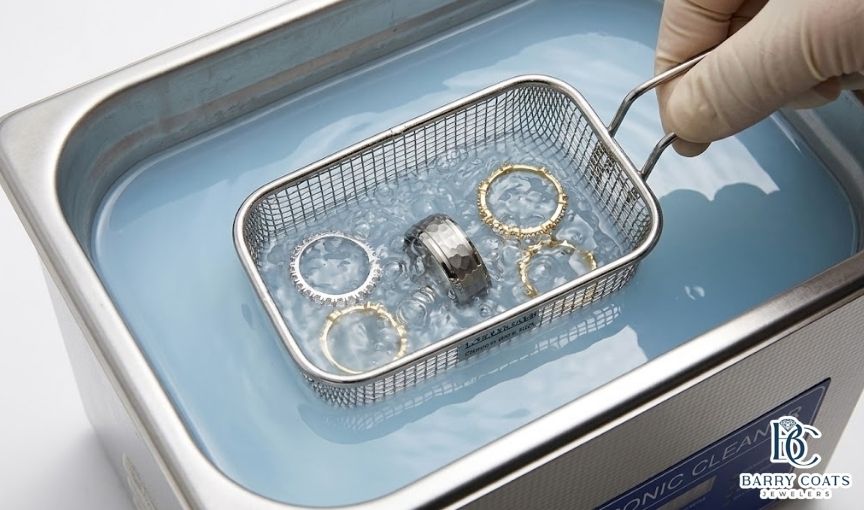
Ultrasonic Cleaner Use for Wedding Bands Guide
Your wedding band is something you wear every single day. Over time, hand lotions, soaps, skin oils, and dust build up behind the stones and inside the metal grooves. This buildup makes shiny metals look dull and steals the sparkle from your diamonds. Many ring owners turn to technology to bring back that original shine. Barry Coats Jewelers recommends regular professional inspections alongside your at-home care routine. Understanding proper ultrasonic cleaner use for wedding bands helps you restore your ring safely without causing accidental damage to your fine jewelry.
Key Takeaways
- Ultrasonic cleaners use high-frequency sound waves to pull dirt away from hard-to-reach areas.
- Plain gold, platinum, and diamonds are generally safe, but soft gems and treated stones should never go into the tank.
- Loose prongs can release stones during vibration, so check your settings before cleaning.
- Keep cycles short and use mild cleaning solutions rather than harsh chemicals.
How Automated Jewelry Cleaning Works
Understanding what happens inside the tank helps you decide if your ring is ready for a cleaning cycle.
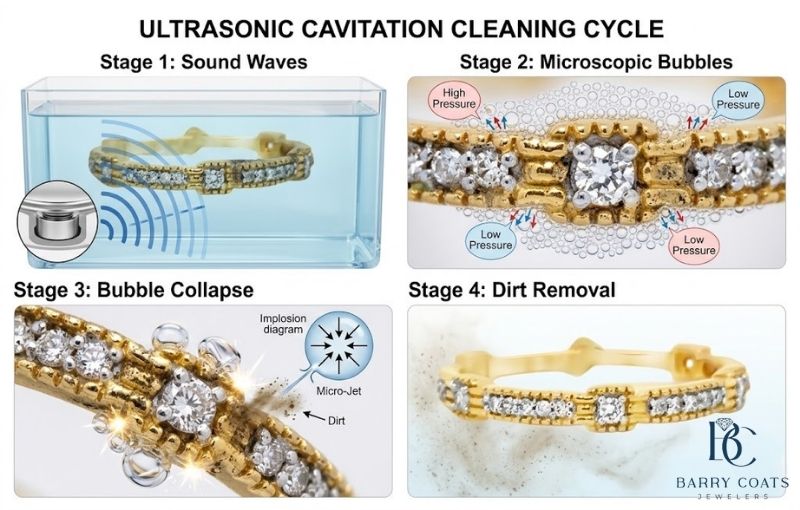
Ultrasonic cleaners rely on a process called cavitation. Here is how that process works inside the machine:
- Sound Waves: The machine sends high-frequency sound waves through water or a cleaning fluid.
- Microscopic Bubbles: These sound waves form tiny bubbles that grow rapidly.
- Bubble Collapse: The bubbles collapse and send small shockwaves against the surface of your ring.
- Dirt Removal: This gentle agitation knocks grime, sweat, and oils off the metal and out of deep crevices where brushes cannot reach.
This style of automated jewelry cleaning works wonders for stuck-on grime, but the rapid vibrations can also shake loose small stones if the metal prongs are already worn thin.
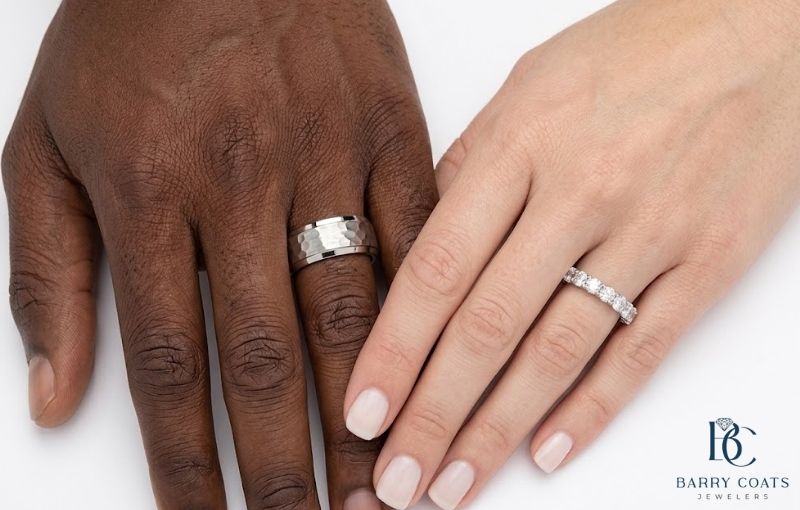
Safe Stone List and Metal Compatibility
Not every wedding band belongs in an ultrasonic bath. Some metals and gemstones handle the pressure waves without an issue, while others can crack, change color, or lose their surface finish.
Review this safe stone list and metal guide before turning on your machine:
| Material Type | Safe for Ultrasonic? | Notes and Warnings |
|---|---|---|
| Diamonds | Yes (Untreated) | Natural, untreated diamonds handle the vibrations well. Avoid fracture-filled. |
| Platinum | Yes | Very durable and safe for regular cycles. |
| Yellow & Rose Gold | Yes | Solid gold handles cleaning well. Check prongs first. |
| White Gold | Yes | Safe, but repeated long cycles may wear down rhodium plating over time. |
| Sapphires & Rubies | Yes (Untreated) | Untreated corundum is tough; avoid oil-treated or filled stones. |
| Emeralds | No | Natural emeralds have internal fissures and oils that the cleaner can strip away. |
| Pearls & Opals | No | Soft and porous organic gems can crack, peel, or discolor. |
| Tanzanite & Turquoise | No | Heat and sound waves can crack these fragile stones. |
| Pave Diamond Bands | Caution | Tiny prongs can loosen quickly under sound vibrations. Inspect carefully. |
Pro Tip: If your wedding ring has mixed gemstones, always clean according to the softest, most delicate stone on the band.
When to Clean Rings with Home Vibration Machines
Knowing when to clean your jewelry prevents unnecessary wear and tear. You do not need to wash your ring in an electric cleaner every day. In fact, overusing home vibration machines can slowly loosen delicate prongs.
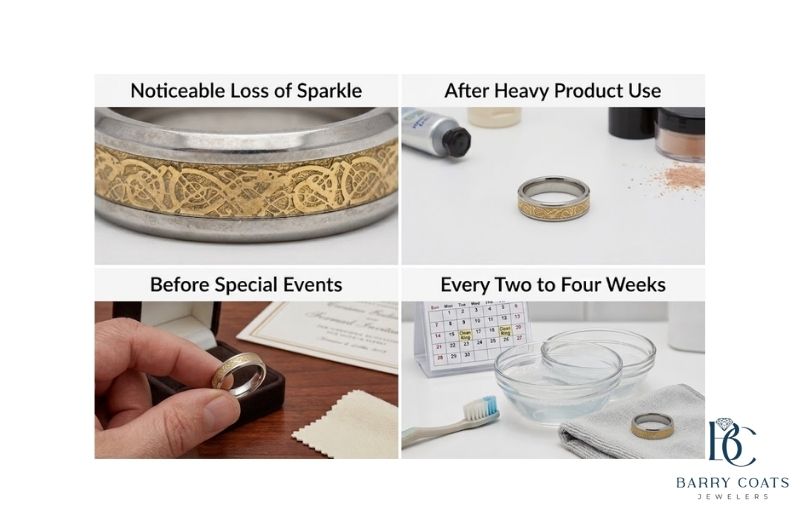
Consider running your ring through a cleaning cycle in these situations:
- Noticeable Loss of Sparkle: When diamond facets look cloudy or flat, grease has built up underneath the setting.
- After Heavy Product Use: If you have spent a weekend gardening, applying sunscreen, or doing messy chores, a cycle helps clear hidden residue.
- Before Special Events: When you want your bridal set to look its brightest for family pictures, anniversaries, or parties.
- Every Two to Four Weeks: A bi-weekly or monthly cycle is plenty to maintain cleanliness without stressing the metal.
If your ring rattles when you tap it against your ear, skip the machine completely. A loose diamond can fall out in the liquid bath and get lost down the drain during clean-out.
Step-by-Step Ultrasonic Cleaning Process
Using an ultrasonic machine at home takes just a few minutes. Follow these practical steps to get clean results without harming your jewelry:
- Check Your Ring First: Use a small toothpick to lightly touch each stone. If anything wiggles, take the ring to a professional jeweler instead of running the wash cycle.
- Mix the Right Solution: Fill the tank with warm (not boiling) tap water. Add a few drops of mild, phosphate-free dish soap or a dedicated jewelry cleaner fluid. Avoid bleach, ammonia, and harsh acids.
- Use the Parts Basket: Always place your wedding band inside the plastic or wire tray provided with the machine. Laying metal jewelry directly on the bottom stainless-steel plate can scratch your ring and damage the transducer.
- Set a Short Timer: Run the cycle for two to three minutes. Most light grime comes off in less than five minutes. Avoid long cycles.
- Rinse with Clean Water: Lift the basket out and remove your ring. Rinse the band under lukewarm running water. Important: Always plug your sink drain beforehand so your ring cannot slip away.
- Dry with a Soft Cloth: Pat the ring dry using a lint-free microfiber cloth. Avoid paper towels, which contain wood fibers that leave tiny micro-scratches on polished gold.
Frequently Asked Questions
Can an ultrasonic machine loosen diamond prongs?
Yes, it can. The vibrations do not break metal, but they can push already-weakened prongs back just enough for small stones to shift. It is smart to inspect your ring before and after every cleaning cycle.
What liquid should you put in the cleaning tank?
Warm water mixed with a small drop of gentle dish liquid is the safest choice for standard gold and diamond wedding bands. You can also buy specialized solutions made specifically for fine jewelry. Never use household glass cleaners, acetone, or abrasive liquids.
How often should wedding rings go into a cleaner?
Cleaning your ring once or twice a month in an ultrasonic unit is plenty. For weekly touch-ups, a quick soak in warm soapy water with a soft-bristled baby toothbrush is gentler and keeps dirt from gathering.
Protect Your Rings with Barry Coats Jewelers
At-home cleaning keeps surface dirt away, but it cannot replace routine care from a trusted local jeweler. Barry Coats Jewelers provides full-service care to keep your bridal jewelry safe and bright. As a fourth-generation, family-owned business in Livingston, Texas, our team knows how to care for fine gold, platinum, and heirloom diamond bands.
Bring your wedding band to Barry Coats Jewelers for professional cleaning, prong tightening, and structural inspections. We check for hidden damage, polish away surface scratches, and make sure your ring stays safe to wear for a lifetime.
Visit Barry Coats Jewelers in Livingston, Texas, for walk-in jewelry cleaning, repairs, and prong checks to keep your wedding band secure and sparkling.