
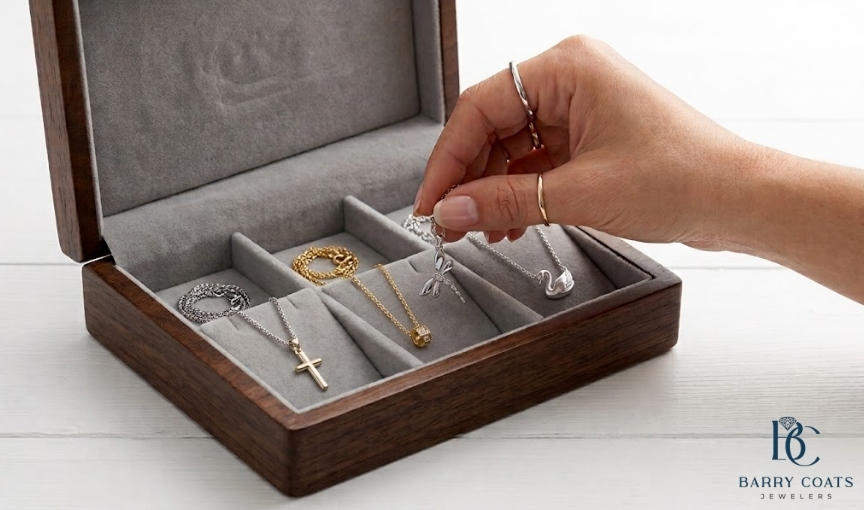
Safe Storage Solutions for Necklaces
A diamond necklace is a classic piece of jewelry that can last for generations. Whether you wear a delicate diamond pendant, a classic tennis necklace, or a custom piece from Barry Coats Jewelers, you need to protect your investment. Leaving a chain on a nightstand or tossing it into a crowded dish can lead to bent clasps, scratched metal, and frustrating knots. Finding the right storage solutions for necklaces will keep your jewelry safe, clean, and ready to wear every day.
Key Takeaways
- Diamonds can scratch other diamonds, precious metals, and soft gemstones if they touch.
- Hanging necklaces stops thin chains from tangling and snapping.
- Soft lining materials cushion settings and keep metal finishes bright.
- Travel requires individual protection to prevent friction inside bags.
- Routine inspections by a trusted jeweler keep clasps and settings secure.
Why Proper Diamond Storage Matters
Diamonds are the hardest natural mineral on Earth, ranking at 10 on the Mohs hardness scale. Because they are so hard, diamonds can easily scratch gold, platinum, and silver. They can even scratch other diamonds.
When you store multiple pieces together in a pile, several problems can happen:
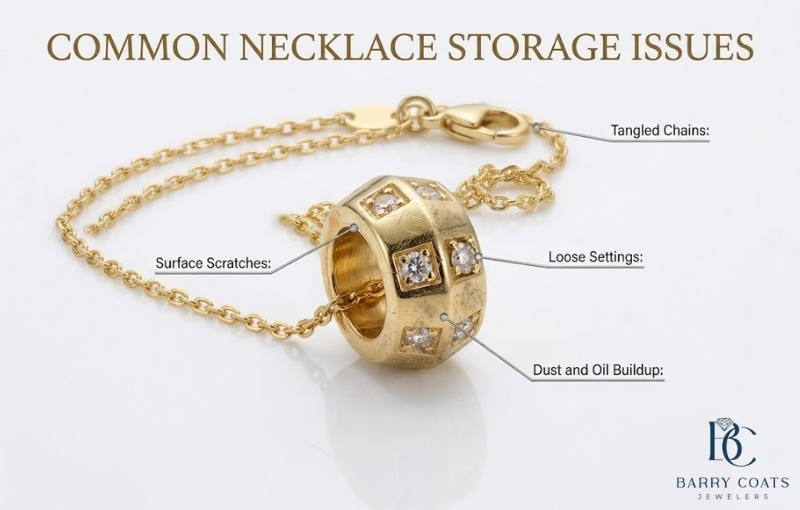
- Surface Scratches: Metal chains and pendants rub against diamond facets, causing tiny abrasions on polished metal.
- Tangled Chains: Delicate links can twist around each other, creating tight knots that are difficult to undo without breaking the chain.
- Loose Settings: Friction and pulling can weaken prongs over time, which may lead to lost stones.
- Dust and Oil Buildup: Open-air exposure attracts dust, lotion residue, and moisture, which dulls the diamond’s natural sparkle
Fabric Lined Boxes for Daily Protection
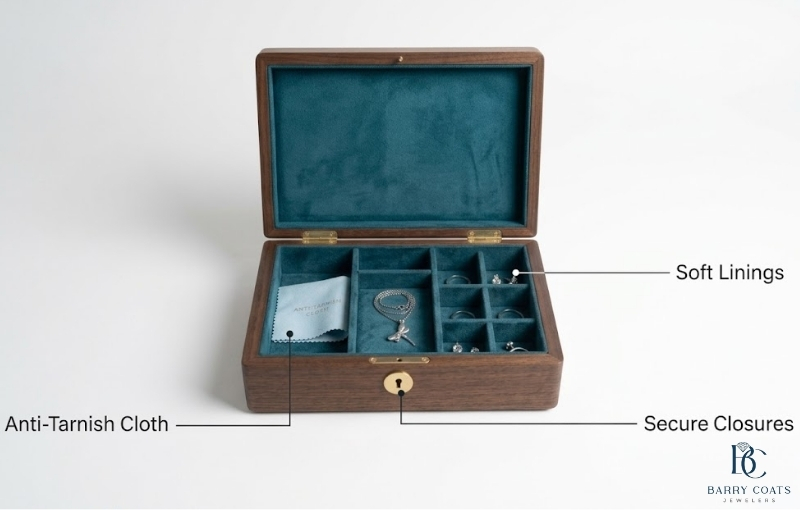
Using fabric lined boxes is one of the most reliable ways to store fine jewelry at home. A quality jewelry box provides a soft, cushioned surface that keeps your pieces secure and shielded from dust.
When selecting a box for your diamond necklaces, look for these features:
- Soft Linings: Materials like velvet, felt, or microfiber prevent metal chains from rubbing against hard wood or plastic surfaces.
- Divided Compartments: Trays with individual slots allow you to keep each necklace isolated from other rings, bracelets, and earrings.
- Anti-Tarnish Cloth: Some boxes include treated linings that slow down the tarnishing process on silver and white gold alloys.
- Secure Closures: A box with a latch or lock keeps drawers shut and guards against accidental spills if the box is moved.
Pro Tip: When placing a necklace in a compartment, fasten the clasp first. Fastening the clasp prevents the two ends of the chain from wrapping around each other.
Tangle Free Hooks for Hanging Storage
Hanging your necklaces vertically is an effective method to avoid knots. Gravity naturally keeps chains straight, which reduces stress on delicate links.
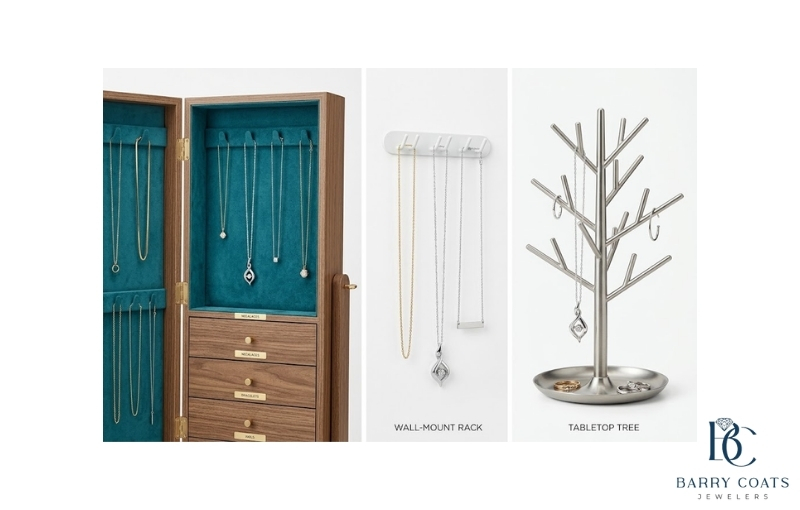
Using tangle free hooks works well for chains of all lengths, from short chokers to long diamond ropes. Here are common hanging options:
- Jewelry Armoires: Freestanding or wall-mounted cabinets with built-in side doors containing rows of hooks.
- Hanging Wall Racks: Mounted bars with pegs that display your pieces clearly on a closet wall or vanity area.
- Tabletop Necklace Trees: Small stands with branches designed to hold two to six necklaces at a time.
When using hooks, leave enough space between each item. If necklaces hang too close together, swinging doors or drafts can cause them to brush against each other.
Comparing Jewelry Storage Options
Different storage styles suit different spaces, collection sizes, and lifestyles. The table below compares the most common methods for storing diamond necklaces:
| Storage Type | Best For | Main Advantage | Watch Out For |
|---|---|---|---|
| Fabric Lined Boxes | Everyday storage of mixed collections | Cushions stones and keeps out dust | Chains can shift if compartments are too large |
| Tangle Free Hooks | Long chains and statement pendants | Prevents knots by hanging chains straight | Exposure to open air and dust if not enclosed |
| Separate Jewelry Pouches | Travel and safe-deposit boxes | Compact and keeps items separated | Does not display pieces visually |
| Original Presentation Boxes | Single special-occasion pieces | Custom-fitted padding from the jeweler | Bulky; takes up a lot of drawer space |
Separate Jewelry Pouches for Travel and Safety
Traveling with fine jewelry requires extra planning. Moving bags cause items to shift, bump, and rub together. Using separate jewelry pouches gives each diamond necklace its own protective barrier.
Good pouch options include:
- Microfiber Snap Pouches: Thin, soft, and easy to slide into a carry-on pocket without adding bulk.
- Drawstring Velvet Bags: Traditional pouches that cushion the piece from outside pressure.
- Padded Travel Rolls: Organizers that feature individual zip pockets and strap holders to anchor chains flat.
Tips for Packing Necklaces for Travel
To prevent tangles while using travel pouches, try these practical steps:
- Fasten the Clasp: Always close the clasp before packing to stop the chain from looping on itself.
- Use the Straw Trick: Thread one end of a thin chain through a regular drinking straw, then fasten the clasp outside the straw. This keeps the chain straight and prevents knots completely.
- One Piece Per Pouch: Never put two necklaces in the same pouch, as they will twist together during transit.
- Keep in Carry-On Bags: Never place fine jewelry in checked luggage. Keep your travel pouches in your personal bag so they stay with you.
Environmental Factors to Keep in Mind
Where you place your jewelry storage is just as important as the storage container itself. Environmental elements can harm metals and settings over time.
Keep your diamond necklace storage away from:
- Excess Humidity: Bathrooms are poor locations for jewelry storage. Steam and moisture accelerate tarnishing and can degrade glue or solder in some jewelry designs.
- Direct Sunlight: Prolonged exposure to sunlight and heat can affect certain gemstones and cause box fabrics to fade.
- Household Chemicals: Do not store jewelry near perfumes, hairsprays, or cleaning agents. Chemicals can leave a film on diamonds and weaken delicate prongs.
A cool, dry closet or bedroom dresser drawer is often the safest spot in your home for fine jewelry.
Professional Care from Barry Coats Jewelers
Even with proper home storage, fine jewelry benefits from routine maintenance. Chains stretch slightly with regular wear, and clasps can loosen over time. Small prongs that hold diamonds in place can also wear down or catch on clothing.
A regular visit to Barry Coats Jewelers helps keep your necklaces in excellent condition. A professional jeweler can:
- Inspect the integrity of prongs, bezels, and clasps under magnification.
- Clean diamonds with professional ultrasonic and steam equipment to restore brilliance.
- Perform necessary chain soldering or clasp replacements if links show signs of wear.
Scheduling an inspection once or twice a year keeps your favorite pieces ready for daily wear or special celebrations.
Conclusion
Taking time to store your diamond necklaces correctly saves you from the frustration of untangling knots and protects your fine jewelry from unnecessary damage. By using soft fabric linings, hanging hooks, and individual travel pouches, you keep your chains straight and your diamonds brilliant. Pairing smart home storage with regular professional checkups ensures your pieces remain in prime condition for years to come.
Frequently Asked Questions
Can diamonds scratch other diamonds in storage?
Yes. Diamonds are the hardest natural substance, which means only another diamond can scratch a diamond. If two diamond necklaces touch or rub together in a box, the stones can abrade each other’s facets. Always store diamond items in separate slots or individual pouches.
How do you untangle a diamond necklace chain?
Place the tangled necklace on a flat, well-lit surface. Apply a drop of baby oil or mineral oil to the knot to lubricate the metal. Use two sewing needles or toothpicks to gently open the center of the knot. Avoid pulling hard on the chain, as excessive force can stretch or snap the links. Wash the necklace with mild soap and warm water once it is untangled.
Should you keep diamond necklaces in their original boxes?
Original boxes from the jeweler provide great protection because they are built to cushion the specific piece. However, keeping many individual boxes can take up a lot of space. If you want to save room, move your necklaces to a divided, fabric-lined jewelry box or hang them on dedicated hooks.
How often should a jeweler inspect your diamond necklace?
It is a good habit to have fine jewelry inspected every six to twelve months. A jeweler can check for worn prongs, weak jump rings, and loose clasps before a stone falls out or a chain breaks.
Ready to care for your favorite jewelry? Visit Barry Coats Jewelers in Livingston, Texas, for professional jewelry cleaning, inspections, and repair services. Our experienced team is here to help your diamonds stay brilliant and secure for years to come.