
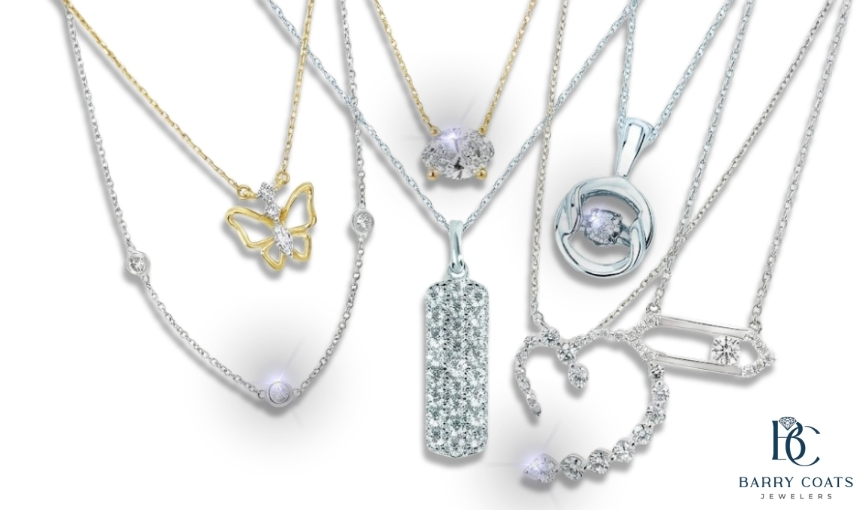
When you wear a beautiful Diamond Sparkle Necklace, you might notice how it catches every light in the room. This effect is not magic. It is the result of physics, geometry, and expert craftsmanship. At Barry Coats Jewelers, we help you understand what makes these pieces stand out. By looking at how light moves through a diamond, you can choose a piece that shines bright for years.
Key Takeaways
- The Cut is Key: The quality of a diamond’s cut determines how much light it reflects.
- Three Main Elements: Sparkle comes from white light (brilliance), colored light (fire), and movement (scintillation).
- Metal Choice Matters: The metal holding your diamond can affect how bright the stone looks.
- Regular Cleaning: Dirt and oil block light, so keeping your necklace clean is important for maintaining its shine.
How Light Interacts with Diamonds
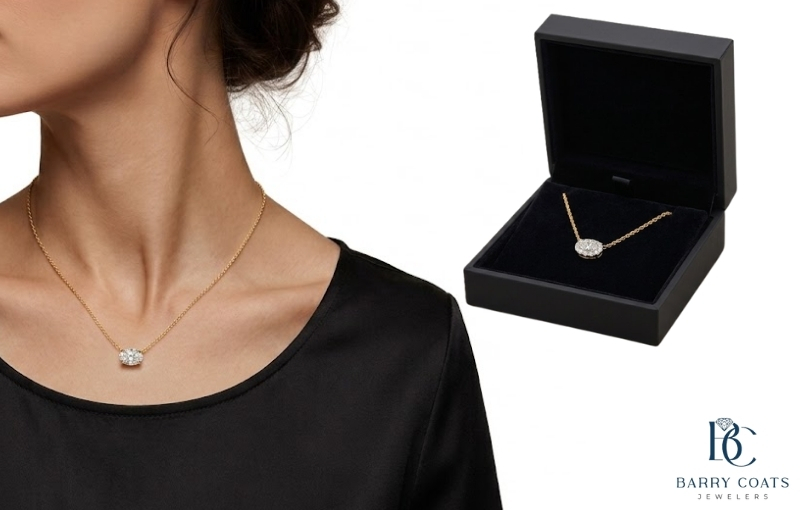
To understand why a Diamond Sparkle Necklace shines so brightly, you must first look at how light behaves. When light hits a diamond, it does not just pass straight through. Instead, it goes through a complex path of bending and bouncing.
Here is what happens to light when it hits a diamond:
- Reflection: This is the light that bounces off the outer surface of the diamond. It gives the stone an immediate shine before the light even goes inside.
- Refraction: When light enters the diamond, it slows down and bends. Diamonds have a high refractive index, which means they bend light much more than glass or water.
- Total Internal Reflection: If the diamond is cut with the correct angles, the bent light bounces off the inside walls of the stone and shoots back out through the crown. This is what makes the diamond look bright to your eyes.
If a diamond is cut too shallow, the light leaks out of the bottom. If it is cut too deep, the light escapes from the sides. Only a proper cut keeps the light bouncing inside to create the ultimate glow.
Comparing Diamond Optics
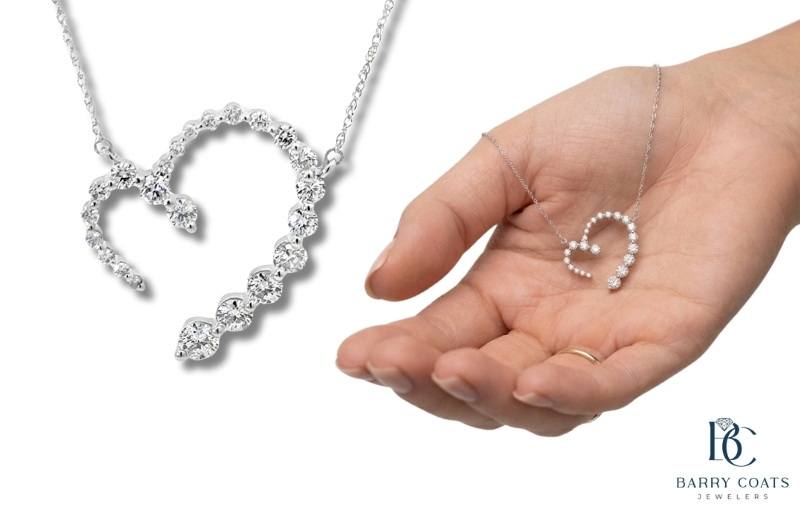
To show how diamonds handle light compared to other options, here is a simple breakdown of optical properties:
| Material | Refractive Index (Bends Light) | Dispersion (Creates Rainbows) | Hardness (Mohs Scale) |
|---|---|---|---|
| Natural Diamond | 2.42 | 0.044 | 10 |
| Lab-Grown Diamond | 2.42 | 0.044 | 10 |
| Cubic Zirconia | 2.15 | 0.058 | 8.5 |
| Glass | 1.50 | 0.010 | 5.5 |
This table shows why both natural and lab-grown diamonds are superior at bending light. They keep their bright look because of their high hardness and high refractive index.
The Science of Fire and Brilliance
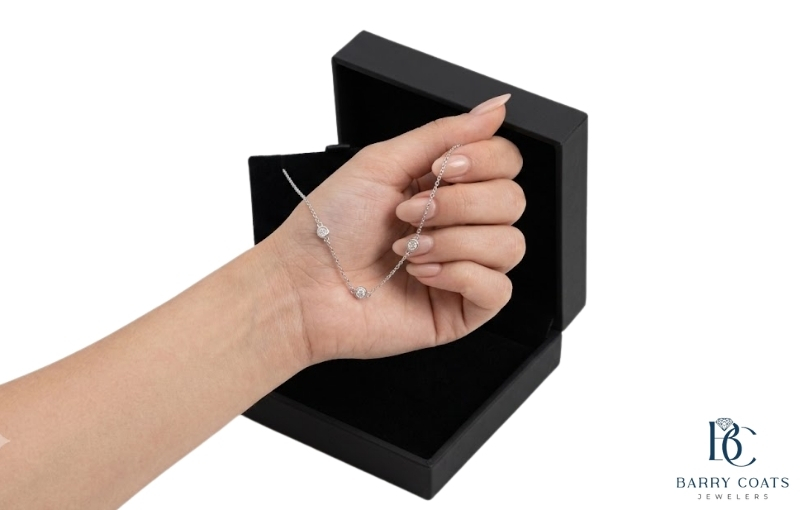
When you look at a Diamond Sparkle Necklace, you see different types of light. Gemologists break this light down into two main parts: fire and brilliance.
- Brilliance: This is the white light that reflects from the diamond. When a diamond has high brilliance, it looks bright and white. It is the result of total internal reflection, where light enters the stone and returns to your eye without escaping.
- Fire: This is the flash of rainbow colors you see when the diamond catches the light. When white light enters a diamond, the stone acts like a tiny prism. It bends the light and separates it into different colors, like red, blue, and orange.
A great diamond must balance both fire and brilliance. If a diamond only has brilliance, it might look bright but lack color. If it only has fire, it might look colorful but dim. The best jewelry pieces offer a perfect mix of both.
The Parts of a Diamond That Create Sparkle
To understand how light moves, it helps to know the basic parts of a cut diamond:
- The Table: This is the flat, upper surface of the diamond. It acts like a window, letting light enter the stone.
- The Crown: This is the slanted upper section surrounding the table. It helps disperse light into rainbow colors.
- The Pavilion: This is the lower, cone-shaped portion of the diamond. It acts like a mirror, reflecting light back up to the crown.
- The Girdle: This is the thin outer edge where the crown meets the pavilion. It is where the setting holds the stone.
Scintillation Light Play in Motion
A diamond does not stay still when you wear it. As you move, the light around you changes. This creates what experts call scintillation light play.
Scintillation is the flash of light and dark patterns you see when:
- The person wearing the necklace moves.
- The light source moves.
- The observer moves.
This movement creates a dynamic display. The dark areas in a diamond are just as important as the bright ones. These dark areas are reflections of your head or body blocking some of the light. They create contrast, which makes the bright flashes look even brighter. Without this contrast, the diamond would look like a solid sheet of white light instead of a sparkling gem.
How Cut Quality Protects Gemstone Life
The term gemstone life refers to how long a stone keeps its beauty, shine, and structural strength. The way a diamond is cut plays a major role in this. A well-cut diamond is less likely to chip and will keep its sparkle for generations.
Here is how different cuts affect the light play and durability of your jewelry:
- Round Brilliant Cut: This cut has 58 facets. It is designed to maximize fire and brilliance. It is a highly popular cut for a Diamond Sparkle Necklace because it reflects the most light.
- Princess Cut: This square cut has sharp corners. It offers great sparkle but requires a secure setting to protect the corners from chipping.
- Cushion Cut: This cut has rounded corners and larger facets. It focuses heavily on fire, showing off beautiful flashes of color.
- Emerald Cut: This cut has step-like facets. It focuses on clarity rather than intense sparkle, giving a hall-of-mirrors effect.
When choosing a necklace, think about how the cut fits your daily life. A round brilliant cut offers the best combination of safety and sparkle.
Choosing the Right Metal for Your Necklace
The metal you choose for your necklace chain and setting affects how the diamond looks. Different metals reflect light in different ways.
- White Gold and Platinum: These cool-toned metals blend in with the diamond. They can make the stone look larger and brighter because they reflect the white light of the diamond.
- Yellow Gold: This warm metal creates a beautiful contrast. It can make a white diamond pop, but it can also cast a slight yellow tint into the stone.
- Rose Gold: This pinkish metal offers a romantic, modern look. It works well with diamonds by adding a soft, warm glow to the overall piece.
At Barry Coats Jewelers, we offer settings in platinum, yellow gold, white gold, and rose gold. Our team can help you find the metal that matches your style and makes your diamond shine the brightest.
Trust Barry Coats Jewelers for Quality Craftsmanship
Buying a Diamond Sparkle Necklace is a special experience. You want to make sure you are getting a piece that is crafted to last. Barry Coats Jewelers is a fourth-generation, family-owned fine jewelry store in Livingston, Texas.
We offer a wide range of services to help you find or create the perfect piece:
- Custom Jewelry Design: If you have a specific vision, we can design a custom necklace from scratch.
- Lab-Grown and Earth-Mined Diamonds: We offer both options so you can choose the stone that fits your budget and preferences.
- Jewelry Repair and Cleaning: We keep your jewelry looking like new with our professional cleaning and repair services.
- Expert Advice: Our team, led by master jeweler Barry Coats and his wife, Angel, is here to help you through the process.
We work with trusted vendors to bring you high-quality jewelry for every style and occasion.
FAQ
Why does my diamond look different in different light?
Diamonds react to the light around them. In bright sunlight, you will see more fire and color. Under office fluorescent lights, you might see more white brilliance. The environment changes how the light bounces inside the stone.
What is the difference between fire and brilliance?
Brilliance is the white light reflected out of the diamond. Fire is the rainbow colors that appear when white light is bent and separated by the diamond’s facets.
Can a dirty diamond stop sparkling?
Yes. Dust, soap, and skin oils can build up on the back of the diamond. This buildup blocks light from entering and leaving the stone. Regular cleanings at Barry Coats Jewelers can restore your necklace’s original shine.
Are lab-grown diamonds as bright as natural ones?
Yes. Lab-grown diamonds have the exact same chemical and optical properties as earth-mined diamonds. They have the same refractive index, meaning they sparkle just as brightly when cut well.
How often should I get my necklace inspected?
It is a good idea to have your jewelry inspected every six months. We check the prongs to make sure your diamond is secure and clean the stone to keep it shining.