
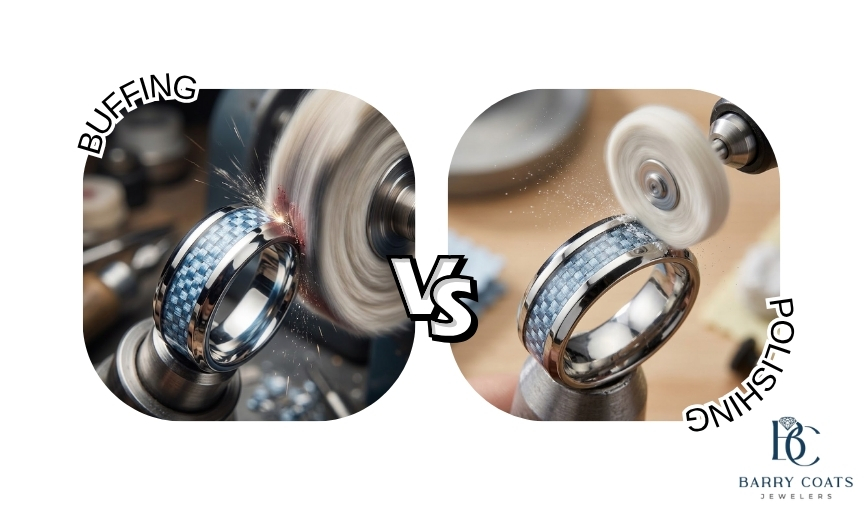
Polishing vs Buffing Rings: What to Know
When you wear fine jewelry every day, your bands pick up scratches, scuffs, and dull spots. Understanding the difference between polishing vs buffing rings helps you make the right choice for maintaining your treasured pieces. While many people use these two terms interchangeably, they actually refer to two separate steps in jewelry care.
Polishing removes tiny layers of metal to smooth out deep marks, while buffing brings out a mirror-like shine. Barry Coats Jewelers offers expert ring maintenance and takes the time to discuss the important difference between polishing. Knowing how each step works will help you protect your investment, keep your jewelry looking new, and prevent unnecessary wear over time.
Key Takeaways
- Polishing cuts metal: Polishing uses harsher abrasives to smooth out nicks and deep scratches.
- Buffing creates shine: Buffing uses soft wheels and light compounds to bring out a brilliant luster.
- Two-step workflow: Jewelers usually polish first to even out the metal, then buff to finish the piece.
- Moderation matters: Over-polishing can wear away delicate details, engraving, and prongs.
- Professional care counts: Routine care keeps yellow gold, white gold, platinum, and silver in great condition.
What Is the Difference Between Polishing and Buffing?
Even though both processes improve the look of your jewelry, they serve different roles during maintenance.
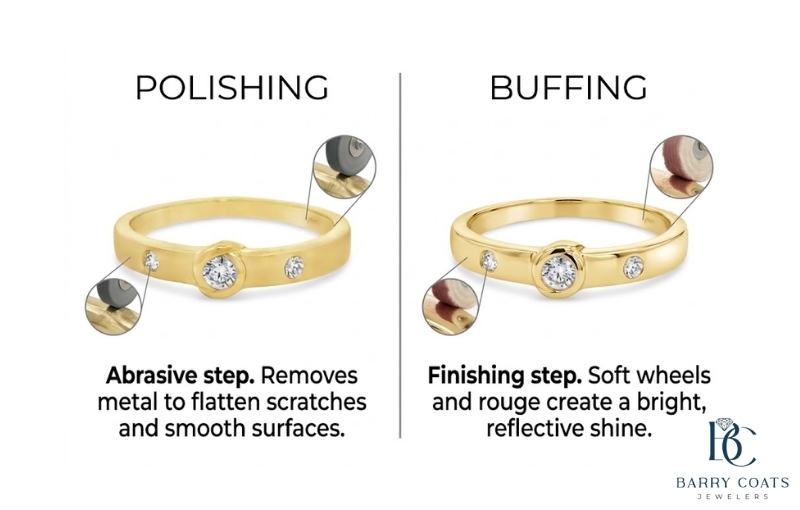
- Polishing: This is an abrasive step. A jeweler uses cutting compounds (such as Tripoli) on rotating wheels to remove a microscopic layer of metal. This step flattens scratches and smooths uneven surfaces.
- Buffing: This is a finishing step. Jewelers use softer wheels, such as muslin or flannel, with very fine compounds (such as jeweler’s rouge). Buffing does not remove scratches; instead, it smooths out the microscopic marks left by polishing to create a bright reflection.
In short, polishing removes surface flaws, and buffing creates the final shine.
Metal Finish Restoration: Comparing the Steps
To see how these two processes work side by side, review the comparison below:
| Feature | Polishing | Buffing |
|---|---|---|
| Primary Goal | Flattens scratches and removes surface damage | Produces a bright, mirror-like luster |
| Abrasive Level | Medium to high abrasive compounds | Very mild, ultra-fine compounds |
| Wheel Material | Stiff felt, hard cotton, or treated wheels | Soft muslin, flannel, or chamois |
| Metal Removal | Removes a microscopic layer of metal | Removes almost no measurable metal |
| Order in Process | Done first to level the surface | Done second to produce shine |
| Recommended Frequency | Once every one to two years | As needed for light shine touch-ups |
Key Insight: Polishing without buffing leaves your ring smooth but cloudy. Buffing without polishing makes a scratched ring shiny, but the deep nicks will still be visible. Professional jewelers almost always use both steps together.
The Scratch Removal Process for Rings and Bands
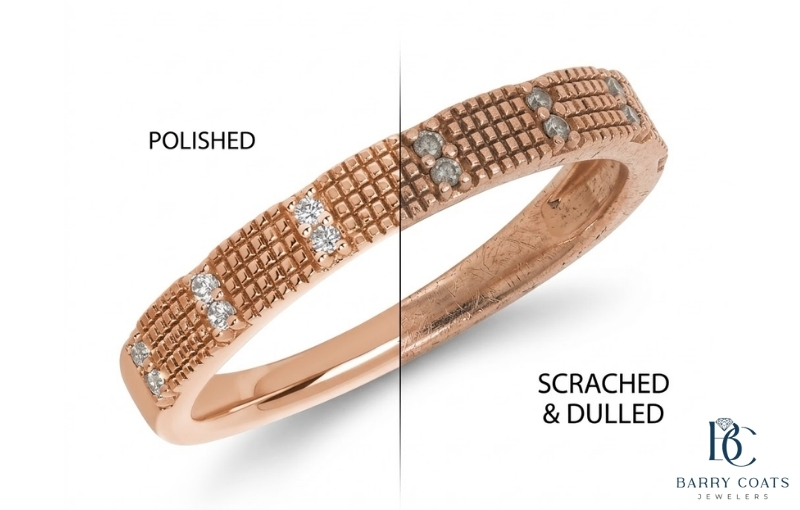
Restoring a wedding band or engagement ring requires careful hands and the right equipment. Professional jewelers follow a clear sequence to safely clean and smooth your metal.
- Initial Inspection: The jeweler checks your ring under magnification to find deep gouges, loose stones, or thin prongs.
- Pre-Cleaning: The ring is soaked and cleaned in an ultrasonic bath to remove dirt, body oils, and lotion buildup.
- Abrasive Polishing: Using a high-speed lathe or rotary tool, the jeweler applies a cutting compound to a firm wheel. They gently press the ring against the wheel to level out scratches.
- Intermediate Smoothing: Finer compounds are used to remove any lines left behind by the initial cutting stage.
- Final Buffing: A soft wheel coated with fine rouge brings the bare metal to a bright luster.
- Ultrasonic and Steam Cleaning: The ring goes through a final wash and high-pressure steam blast to clear away compound residue.
- Final Quality Check: The jeweler inspects the settings to make sure all stones remain secure after the process.
Ring/Band Surface Treatment Guide for Different Metals
Different metals react differently to friction and abrasives. Here is what you should expect based on the metal of your ring:
- Yellow Gold: Gold is relatively soft. It polishes and buffs quickly, but frequent aggressive polishing will thin the band over decades.
- White Gold: Polishing removes the outer rhodium plating along with the scratches. After buffing, white gold requires a fresh rhodium dip to regain its bright white look.
- Rose Gold: Rose gold contains copper, making it slightly harder than yellow gold. It responds well to standard polishing compounds.
- Platinum: Platinum does not lose metal the way gold does; instead, the metal shifts when scratched (creating a soft haze called a patina). Restoring platinum requires specific, dense compounds and firm pressure.
- Sterling Silver: Silver tarnishes easily and scratches quickly. It needs gentle compound work to avoid removing fine stamped details.
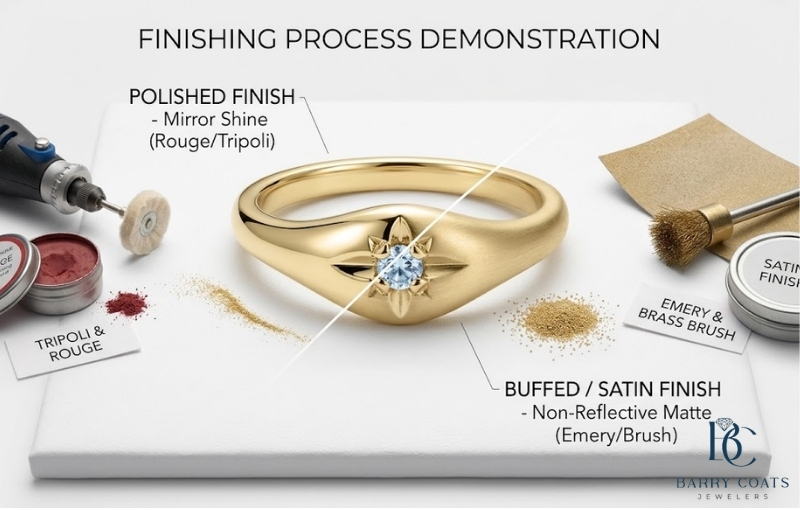
Pro Tip: If your ring has a satin, brushed, or matte finish, do not buff it at home. Buffing will turn a matte finish into an uneven semi-gloss. Matte surfaces require specialized abrasive wheels to restore the textured grain.
How to Protect Your Ring Between Professional Visits
While professional work is necessary for deep scratches, daily habits determine how often you will need that service.
- Remove rings during heavy tasks: Take off your bands before lifting weights, gardening, doing construction, or handling heavy tools.
- Avoid harsh household cleaners: Bleach, chlorine, and abrasive cleaning powders can pit metal and weaken prongs.
- Use a soft jewelry cloth: Wipe down your bands weekly with a dedicated micro-fiber jewelry cloth to remove body oils and restore light shine without scratching.
- Store pieces separately: Keep rings in individual fabric pouches or lined compartments so diamonds and hard metals do not scratch softer bands.
Frequently Asked Questions
Can polishing damage the engravings inside my ring?
Yes, if done improperly. Polishing removes surface metal. A skilled jeweler will protect internal stamps, hallmarks, and personal messages by keeping abrasive wheels away from the inside engraving.
Can I remove deep scratches at home with a polishing cloth?
No. Hand-held clothes only remove oxidation, tarnish, and minor oil film. Deep scratches need motorized equipment and cutting compounds operated by an experienced jeweler.
How often should I have my ring polished?
Most jewelers recommend a full polish no more than once every one to two years. Buffing and simple ultrasonic cleanings can be done more frequently because they do not remove base metal.
Caring for Your Rings Over a Lifetime
Taking proper care of your jewelry keeps it bright for future generations. Polishing takes care of scratches that happen during daily life, while buffing restores the bright shine you fell in love with on day one. By balancing both treatments and leaving deep restoration to trained professionals, your rings will stay strong and bright for decades to come.
Visit Barry Coats Jewelers in Livingston, Texas, for professional jewelry cleaning, scratch removal, and complete ring care services.