
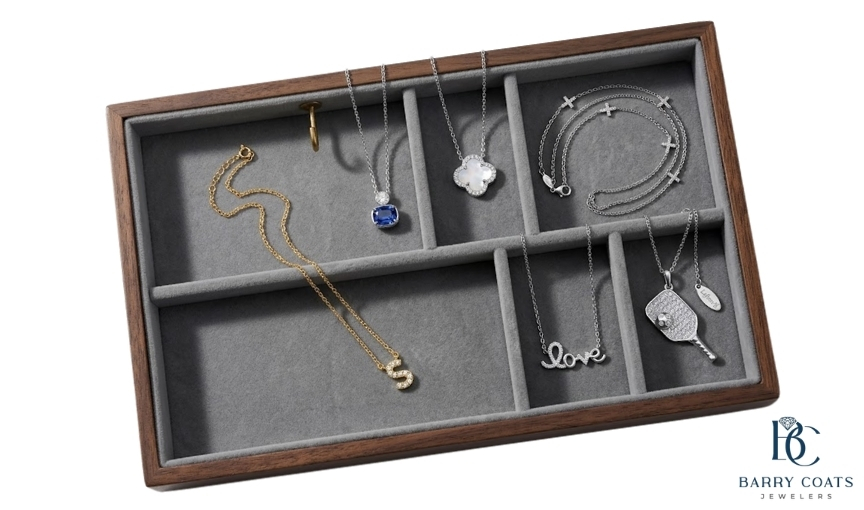
Care Rules for Your Daily Wear Necklace
A diamond pendant brings bright light to any outfit you wear. When you pick a daily wear necklace, you want it to stay safe and bright every day. Wearing fine jewelry daily means your piece faces normal tasks like working, running errands, and resting.
Knowing how to care for your chain and setting helps protect your valuable piece. At Barry Coats Jewelers, we help customers keep their fine jewelry in great shape. Follow these practical rules to keep your diamond chain safe, secure, and clear.
Key Takeaways
- Take off your necklace before heavy exercise, swimming, or sleeping.
- Choose strong metals like yellow gold, white gold, rose gold, or platinum for frequent wear.
- Clean your diamond weekly using mild soap and warm water.
- Have your settings checked by professional jewelers once or twice each year.
Choosing the Right Metal for Everyday Use
The metal you choose for your necklace affects how well it handles daily use. Stronger metals protect your stone and hold up well over time.
- Yellow Gold: Classic and warm. 14k yellow gold offers a balance of purity and strength for everyday use.
- White Gold: Gives a bright silver finish. It pairs well with white diamonds but needs occasional rhodium plating to maintain color.
- Rose Gold: Features a soft pink hue. The copper mixed into the gold makes it strong against daily bumps.
- Platinum: The strongest option for fine pieces. It holds stones securely and does not wear away quickly over time.
Metal Comparison for Daily Use
| Metal Type | Durability Level | Care Need | Best For |
|---|---|---|---|
| 14k Yellow Gold | High | Low | Classic style and daily wear |
| 14k White Gold | High | Periodic replating | Modern, bright shine |
| Rose Gold | High | Low | Added strength and pink tone |
| Platinum | Very High | Low | Maximum diamond setting security |
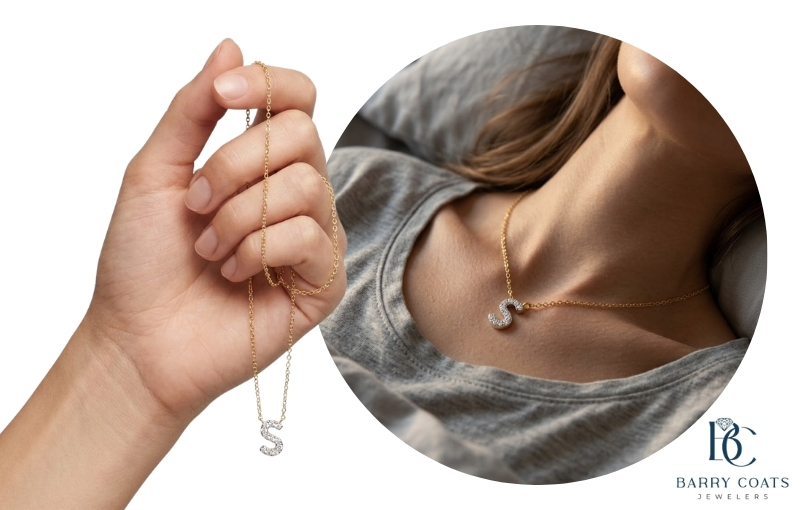
Sleeping in Jewelry: Safe Habits for Your Chain
Many people prefer to leave their necklace on at night to save time. However, sleeping in jewelry can cause hidden damage to thin chains and stone settings.
Here are the primary risks of keeping your necklace on while in bed:
- Tangling and Kinking: Turning over while sleeping can twist fine chain links. This creates tight knots that are difficult to undo without damaging the metal.
- Bending Prongs: Pillowcases and blankets can snag on small metal prongs. Constant pulling can loosen your diamond over time.
- Skin Irritation: Trapped lotion, moisture, and skin oils under the pendant can cause red spots or mild itching overnight.
Pro Tip: Place a small soft dish on your nightstand. Make it a habit to unhook your chain and place it in the dish before bed.

Showering With Diamonds and Soap Film
It might seem easy to keep your necklace on while bathing, but showering with diamonds regularly dulls their shine. Clean water does not harm natural diamonds, but personal care products do.
Consider how your bathing routine affects your pendant:
- Body Washes and Soaps: Bar soaps leave a thin film over the stone. This layer blocks light from hitting the diamond facets, making it look dark.
- Shampoos and Conditioners: Thick oils in hair products build up behind metal mountings. Dirt clings to these soft residues easily.
- Hard Water Deposits: Tap water with high mineral counts can leave tiny spots on polished gold or platinum.
Gym Wear Risks to Avoid
Working out while wearing fine necklaces carries high risks for accidental damage. Understanding gym wear risks helps you avoid losing stones or breaking thin chains.
Here is why you should place your necklace in a soft pouch before starting your workout:
- Weight Lifting Impact: Heavy metal bars or dumbbells can strike your pendant directly. Strong hits can chip the stone or bend metal prongs out of place.
- Heavy Sweating: Sweat contains natural salts that dull polished metal finishes over time.
- Cardio Movement: Running or jumping causes heavy pendants to bounce hard against your collarbone or shirt zippers.
- Equipment Snags: Exercise machinery and gym towels can catch small chain links, causing them to stretch or snap.
Chemical Hazards to Keep Away From Diamonds
Diamonds are hard, but the metals that hold them can react poorly to household chemicals. Protecting your daily piece means keeping it away from harsh liquids.
- Pool Chlorine: Chlorine weakens gold alloys over time. This makes prongs brittle and more likely to break.
- Perfumes and Hairsprays: Alcohol-based sprays leave a sticky layer on metal and stones that attracts dust.
- Cleaning Bleach: Heavy household cleaners can discolor white gold and yellow gold mountings.
Rule of Thumb: Put your daily necklace on last when getting dressed in the morning, and take it off first when you return home.
Simple Cleaning and Inspection Routines
Keeping your favorite necklace clear requires simple home care paired with periodic store checkups.
How to Clean Your Diamond at Home
Follow these steps to safely clean your necklace at home:
- Fill a small bowl with warm water and a few drops of mild dish soap.
- Place your diamond necklace in the soapy water for ten to fifteen minutes.
- Gently brush behind the setting with a soft-bristled toothbrush to remove trapped oil.
- Rinse the necklace thoroughly in clean warm water. (Make sure the sink drain is covered!)
- Pat the piece dry with a soft, lint-free cloth.
Maintenance Advice: Schedule a professional inspection once or twice a year. At Barry Coats Jewelers, staff check prong tightness and inspect chain links under magnification to keep your stone safe.
Frequently Asked Questions
Can I wear my diamond necklace every day?
Yes, you can wear a diamond necklace every day if it features a strong chain and a secure setting like a bezel or sturdy four-prong mount.
What is the best chain style for a daily wear necklace?
Cable chains, wheat chains, and box chains are popular choices for daily wear. They offer strong links that resist stretching and twisting.
Is it bad to get perfume on my diamond necklace?
Yes. Spraying perfume directly on your necklace creates a dull layer that blocks light. Apply perfumes and lotions first, let your skin dry, and put your necklace on last.
How often should I have my daily necklace inspected?
You should bring your necklace to a professional jeweler once or twice a year to check for loose prongs or weak chain clasps.
Need help keeping your daily jewelry safe? Visit Barry Coats Jewelers for professional cleaning, chain repairs, and expert inspection services.