Choosing the Best Cut Quality Diamond Necklace
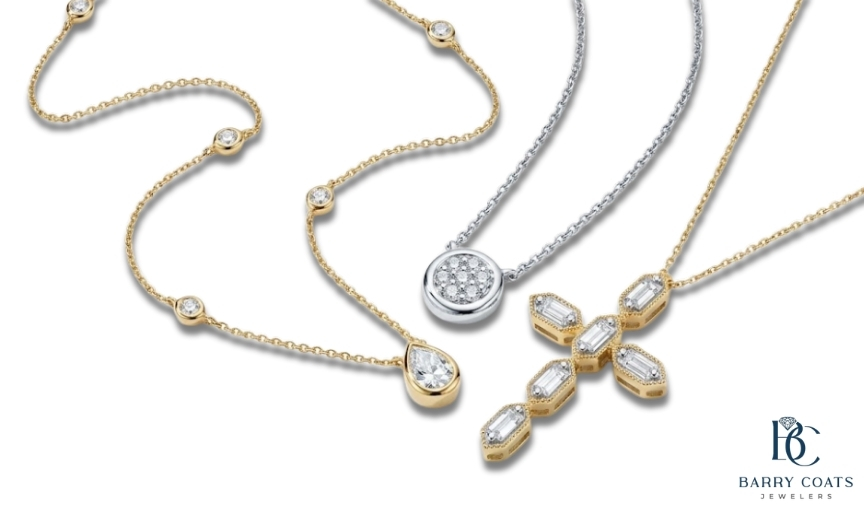
When you shop for fine jewelry, you want a piece that catches the eye across the room. Finding the right cut quality diamond necklace is the single most significant decision you will make during your search. Many shoppers focus first on carat size or clear color, but the way a cutter shapes and facets the stone controls how brightly it shines.
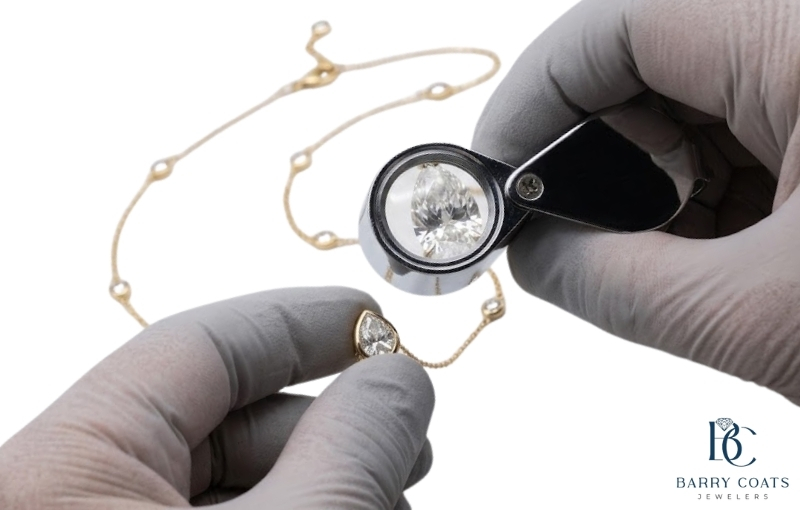
Even a diamond with no internal flaws can look dull and lifeless if the proportions are off. Barry Coats Jewelers helps you inspect stones in person to see the actual light reflection under natural conditions.
On the other hand, an expert cut makes a modest stone look larger, brighter, and full of fire.
Key Takeaways
- Diamond cut directly controls light reflection, brightness, and visual fire.
- A well-cut diamond looks larger than a poorly cut stone of the exact same carat weight.
- Choosing higher cut grades allows you to balance color and clarity without losing brilliance.
Understanding Light Performance Grades and Brilliance
When gem laboratories evaluate diamonds, they look closely at light behavior. Diamond cut does not refer to the shape of the stone, such as round, oval, or pear. Instead, it refers to the symmetry, polish, and exact angles of each tiny facet.
These angles act like a series of mirrors. When light enters through the top of the diamond, it bounces off the interior walls and reflects straight back up to your eyes. If the cut is too shallow or too deep, light leaks out through the sides or bottom, leaving dark patches in the stone.
The diamond industry measures this visual effect through three main qualities:
- Brilliance: The total amount of white light reflected back to the viewer.
- Fire: The flashes of vivid rainbow colors produced when light splits as it passes through the stone.
- Scintillation: The pattern of light and dark areas along with the sparkle produced when the necklace moves.
Labs assign light performance grades to reflect these factors. Choosing a stone with high light performance means your pendant stays lively even in dim evening light.
How Proportional Gem Cuts Shape Your Necklace
A diamond pendant rests flat against your skin or clothing. Unlike a ring on your hand, which you can tilt to catch the light, a necklace stays in a relatively fixed position. Because light usually comes from above you, proportional gem cuts are essential for pendants.
If the proportions are off, the diamond loses its ability to gather overhead light. Here is how diamond cut depth influences what you actually see:
- Shallow Cut: The light hits the pavilion facets at a low angle and escapes through the bottom. The diamond appears flat, glassy, and sometimes develops a dark “fish-eye” ring in the center.
- Deep Cut: The light bounces off the first wall at an awkward angle and drops out through the opposite side. The stone looks smaller from the top and often appears dark or cloudy.
- Ideal Cut: The light hits each facet at the perfect angle, sending nearly all light back out through the table. You get a bright, lively center that commands attention.
Comparing Cut Grades for Necklaces
The table below breaks down the differences between standard cut grades for a center diamond:
| Cut Grade | Light Return | Visual Face-Up Size | Best For |
|---|---|---|---|
| Ideal / Excellent | Maximum white light and color fire | Full visual spread; looks true to size | Everyday wear; pendant centers |
| Very Good | High light return with minor leakage | Near-full spread; very bright | Great balance of beauty and budget |
| Good | Moderate reflection; some light escapes | May look slightly smaller | Accent stones; halo designs |
| Fair / Poor | Low light return; noticeable dark spots | Often looks dull or undersized | Not recommended for main pendants |
Pro Tip: If you must adjust your budget, consider lowering your clarity or color grade slightly instead of lowering the cut grade. A stone with a superior cut easily masks minor inclusions and slight warm tones.
Sparkle Factor Ratings and Diamond Symmetry
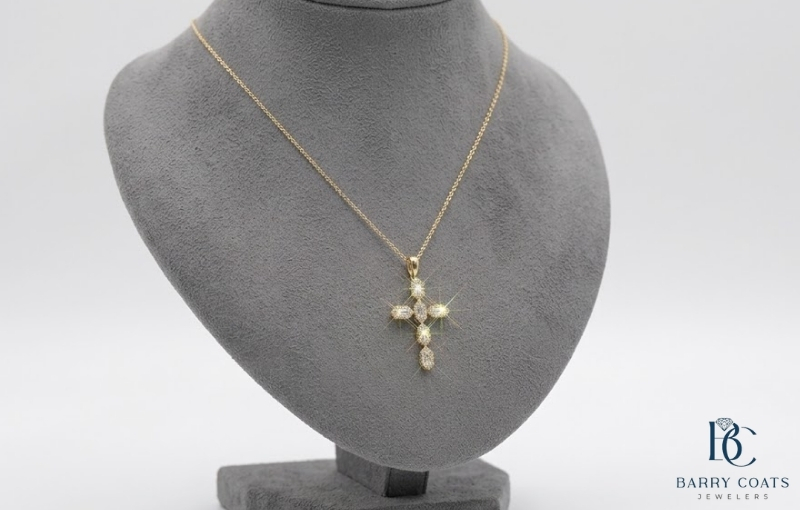
Evaluating diamond cut involves more than simple depth and width. Laboratories study facet alignment to determine sparkle factor ratings. When facets align with precision, they create balanced optical patterns.
When looking at a diamond necklace in person, pay attention to these key details:
- Table Percentage: The flat top facet should not be too wide or too narrow. A balanced table allows the right blend of fire and brilliance.
- Symmetry: Look at the matching facets on opposite sides of the stone. Misaligned facets bend light off-target, creating dead zones.
- Polish Finish: The surface of each facet must be smooth. Rough polish lines act like scratches on a mirror, dulling the reflection.
- Girdle Thickness: A girdle that is too thick hides useless weight where you cannot see it. A girdle that is too thin chips easily inside a necklace setting.
Diamond Necklace Settings and Metal Options
The setting you select plays a supporting role in how light enters your diamond. You can select from several classic precious metals based on your style:
- 14k or 18k White Gold: Offers a crisp, silvery background that blends with the bright flashes of a well-cut stone.
- Platinum: A naturally white, dense metal that holds stones securely while protecting diamond edges.
- Yellow Gold: Adds a warm, traditional contrast that makes the white flashes of the diamond pop.
- Rose Gold: Provides a romantic, pinkish tone that works wonderfully with modern pendant designs.
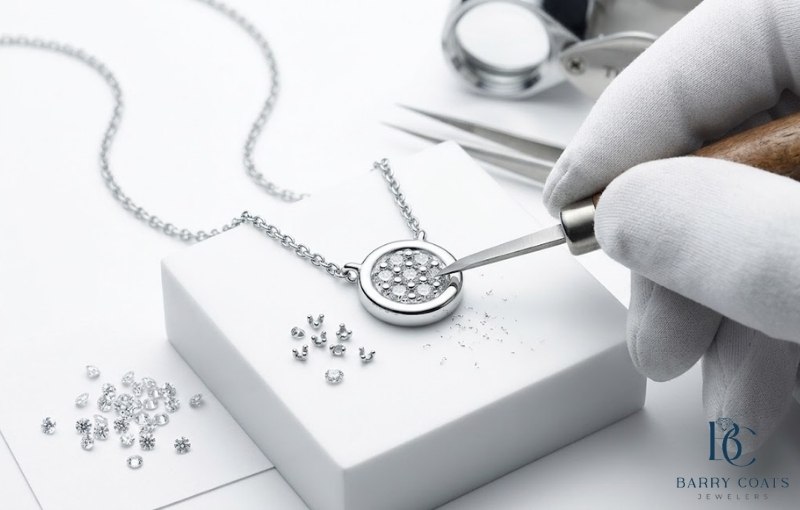
Settings like bezels wrap metal around the rim of the diamond, protecting it from daily bumps. Prong settings, such as four-prong or three-prong martini settings, lift the diamond and allow open viewing angles. Barry Coats Jewelers offers custom jewelry design services to help you pair the right stone with your favorite mounting.
Earth-Mined and Lab-Grown Diamond Necklaces
Both earth-mined diamonds and lab-grown diamonds share identical physical, chemical, and optical properties. That means cut quality rules apply equally to both types of stones.
Whether you choose an earth-mined heirloom diamond or a modern lab-grown diamond, the quality of the faceting determines the brilliance. Selecting a lab-grown diamond often allows you to secure a higher cut grade within your target budget. At Barry Coats Jewelers, you can view both options side by side to decide which path fits your preferences.
Maintaining Your Diamond Necklace Over Time
Skin oils, lotions, and dust collect on the underside of a pendant over time. Even a stone with perfect proportions stops sparkling when coated in residue.
Keep your necklace shining with simple habits:
- Clean your pendant at home using warm water, mild dish soap, and a soft-bristle toothbrush.
- Rinse the piece thoroughly and pat it dry with a lint-free cloth.
- Avoid wearing your necklace while applying hairspray, perfumes, or heavy body creams.
- Bring your jewelry to Barry Coats Jewelers for walk-in professional jewelry cleaning and prong inspections.
Final Thoughts on Diamond Cut Selection
Carat weight tells you how heavy a diamond is, but cut reveals its true character. Investing in a cut quality diamond necklace gives you a piece of jewelry that stands out, reflects light across any room, and holds its visual appeal for generations. Pay attention to proportions, demand strong symmetry, and always prioritize how the stone performs in the light.
Frequently Asked Questions
Does diamond cut change how big the stone looks?
Yes. A well-cut diamond spreads its weight evenly across the top surface, giving it a larger face-up appearance. A stone cut too deep hides its carat weight in the bottom of the setting, making it look smaller than it actually is.
Can a high clarity grade make up for a poor cut?
No. Clarity only measures internal flaws or surface blemishes. If a flawless stone has poor proportions, light will simply leak out the bottom, leaving the diamond dull, dark, and lifeless.
What diamond shape offers the highest light return?
Round brilliant diamonds feature 57 or 58 facets designed specifically to maximize light return. While fancy shapes like ovals, pears, and cushions are popular, round cuts offer the highest standard for brilliance and fire.
Visit Barry Coats Jewelers
Ready to find the perfect diamond necklace? Visit Barry Coats Jewelers in Livingston, Texas, to inspect a wide range of earth-mined and lab-grown diamonds. Our knowledgeable team helps you compare cuts, settings, and styles in person to choose jewelry you will cherish forever. Walk in today for personalized assistance, custom designs, and complete jewelry care.