Clarity Grades Diamond Necklace Buying Guide
When you shop for fine jewelry, choosing the right piece can feel overwhelming. Finding the right clarity grades diamond necklace means balancing sparkle, purity, and your personal budget. Every diamond holds unique features formed deep within the earth or inside a laboratory. Understanding how jewelers grade these gems helps you pick a piece you will treasure for a lifetime.
At Barry Coats Jewelers, our family has guided customers through fine jewelry selections for four generations. Whether you want a classic solitaire pendant or a detailed custom piece, learning about clarity gives you confidence before you buy.
Key Takeaways
- Diamond clarity measures natural internal marks (inclusions) and surface traits (blemishes).
- Necklaces sit against the skin or clothing, so tiny flaws are much harder to spot than in rings.
- Choosing diamonds in the VS or SI range provides great beauty while saving money.
- Cut quality works side by side with clarity to hide imperfections through light reflection.
- Barry Coats Jewelers offers personalized guidance to help you select diamonds that fit your personal taste.
What Diamond Clarity Means for Your Jewelry
Diamond clarity refers to the purity of a stone. When natural diamonds develop under heat and pressure, small minerals can become trapped inside them. These tiny features are called inclusions. Surface marks that happen during cutting or wearing are called blemishes.
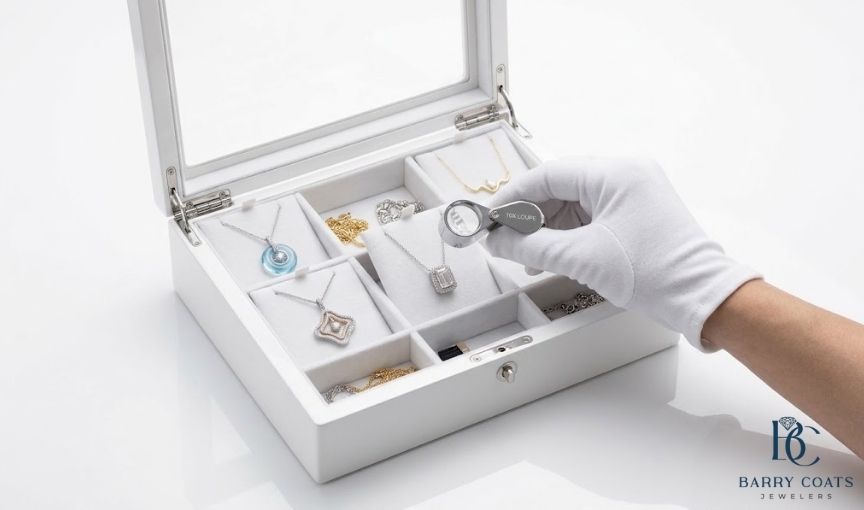
To determine a stone’s score, gemologists inspect diamonds under 10x magnification. They check five specific factors:
- Size: Large inclusions reduce clarity scores more than tiny pinpoints.
- Number: Stones with many marks receive lower grades than stones with only one or two.
- Position: Marks located directly under the center table face stand out more than marks hidden near the outer edge.
- Nature: Certain marks, such as internal cracks or feathers, affect durability, while small crystals simply affect appearance.
- Color or Relief: Dark inclusions create higher contrast and catch the eye faster than clear or white inclusions.
Key Insight: Clarity does not mean a stone is fragile. Most natural markings are microscopic and do not threaten the strength of your necklace.
Understanding Flawless Diamond Ratings
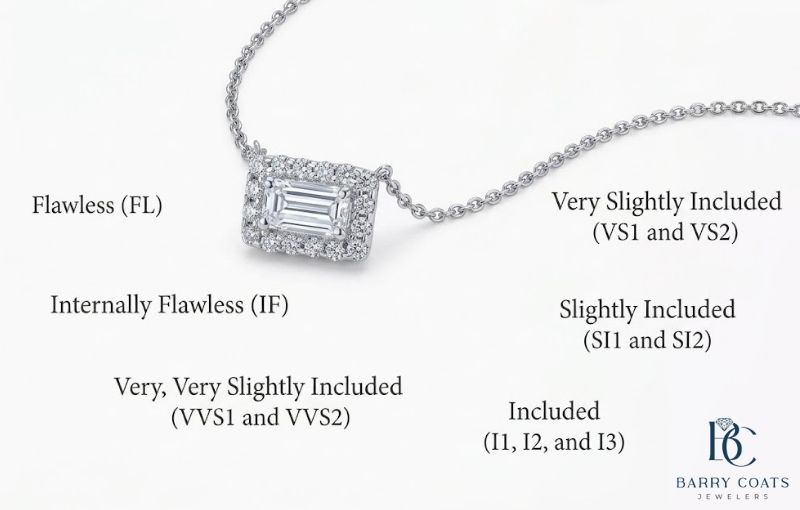
Gemological laboratories group diamonds into six main categories, divided into eleven specific grades. At the very peak of the scale sit flawless diamonds.
The standard industry clarity scale includes:
- Flawless (FL): No inclusions or blemishes visible under 10x magnification.
- Internally Flawless (IF): No inclusions visible under 10x magnification, with only minor surface blemishes.
- Very, Very Slightly Included (VVS1 and VVS2): Inclusions are so small that skilled graders struggle to see them under 10x magnification.
- Very Slightly Included (VS1 and VS2): Minor inclusions visible under magnification, but rarely visible to the naked eye.
- Slightly Included (SI1 and SI2): Inclusions are noticeable under magnification and may sometimes be seen with the naked eye.
- Included (I1, I2, and I3): Inclusions are obvious under 10x magnification and often visible without tools, which can affect brilliance.
Are Inclusion Free Gems Worth the Cost?
Diamonds with flawless diamond ratings are extremely rare. Because true inclusion free gems represent a tiny percentage of all mined stones, they carry significant price tags.
For a pendant or necklace, paying for complete perfection is not always necessary. When you wear a diamond necklace, people view it from a conversational distance. Unlike an engagement ring that people inspect up close on a hand, a pendant rests against your neckline. You can often choose a lower clarity rating without sacrificing visual charm.
| Clarity Grade | Description | Visibility to Naked Eye | Best Value Profile |
|---|---|---|---|
| FL / IF | Completely free of internal marks under 10x magnification | Completely clear | Collectors and rare investment pieces |
| VVS1 / VVS2 | Minute internal characteristics | Completely clear | Buyers wanting near-perfection |
| VS1 / VS2 | Minor internal characteristics | Eye-clean in almost all cases | Excellent balance of purity and price |
| SI1 / SI2 | Noticeable marks under magnification | Often eye-clean, especially SI1 | Great choice for budget-conscious buyers |
| I1 / I2 / I3 | Obvious internal marks | Usually visible without tools | Value-focused options for accent stones |
Key Insight: Polishing without buffing leaves your ring smooth but cloudy. Buffing without polishing makes a scratched ring shiny, but the deep nicks will still be visible. Professional jewelers almost always use both steps together.
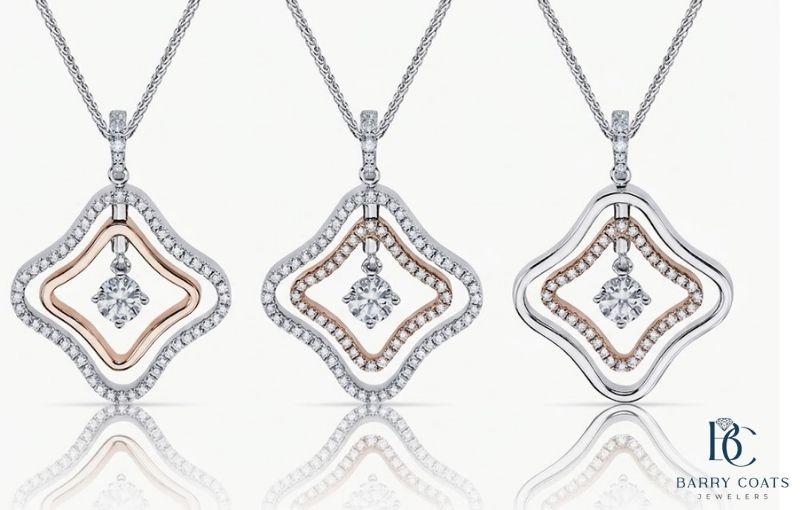
Comparing VS SI Clarity in Necklaces
When shopping for a clarity grade diamond necklace, the middle of the scale provides the best combination of appearance and price. This middle ground is where you find the debate between VS and SI stones.
Why VS Grades Shine in Pendants
A VS clarity grade means the diamond has tiny inclusions that are difficult to locate under 10x magnification.
- VS1 diamonds feature inclusions that even trained gemologists take time to find.
- VS2 diamonds have inclusions that are slightly easier to locate with tools, but still invisible to the naked human eye.
If you choose a VS grade for your necklace, you receive peace of mind knowing the stone looks clean and bright under any light.
The Value Advantage of SI Diamonds
A diamond with an SI rating provides real savings. Many SI1 stones and well-selected SI2 stones are completely “eye-clean.” This term means that when you look at the necklace without a microscope, you cannot see any dark spots or clouds.
Here is why an SI clarity grade works especially well for necklaces:
- The pendant moves naturally with your body, creating flashes of light that mask tiny marks.
- Smaller accent stones in halo pendants or multi-stone chains hide marks easily.
- You can put the savings toward a larger carat size or a finer precious metal setting.
Pro Tip: Always ask to inspect an SI1 stone in natural lighting. Many SI1 diamonds look identical to flawless stones unless you view them through a jeweler’s loupe.
Why Cut Quality and Clarity Go Hand in Hand
Clarity tells you about the purity of the rough stone, but cut quality reveals how well a jeweler shaped that rough stone. Even if you buy an inclusion free gem, a poor cut will leave the stone looking dark, glassy, or lifeless.
Cut quality directs the way light bounces inside the diamond and returns to your eye:
- Light Reflection: When a diamond has excellent symmetry and proportions, light enters through the top, bounces off the interior facets, and reflects straight back out.
- Brilliance and Fire: Bright reflections create white flashes (brilliance) and rainbow flashes (fire). This intense sparkle actually hides minor inclusions from view.
- Face-Up Appearance: A well-cut diamond looks whiter and brighter, making an SI diamond appear clearer than an average-cut VS stone.
When you invest in a diamond necklace, pairing balanced clarity with great cut proportions produces the most eye-catching result.
Selecting the Right Metal Setting for Your Necklace
The metal you pick for your diamond necklace setting influences how clarity and color appear:
- Platinum: A naturally white, dense metal that holds diamonds securely and pairs well with high-clarity stones.
- White Gold: Offers a bright silver-white look that matches icy, clear diamonds.
- Yellow Gold: Provides a warm, traditional look. The rich yellow hue can easily mask faint color tints in SI diamonds.
- Rose Gold: Gives a modern, romantic pink tone that complements vintage-inspired necklace designs.
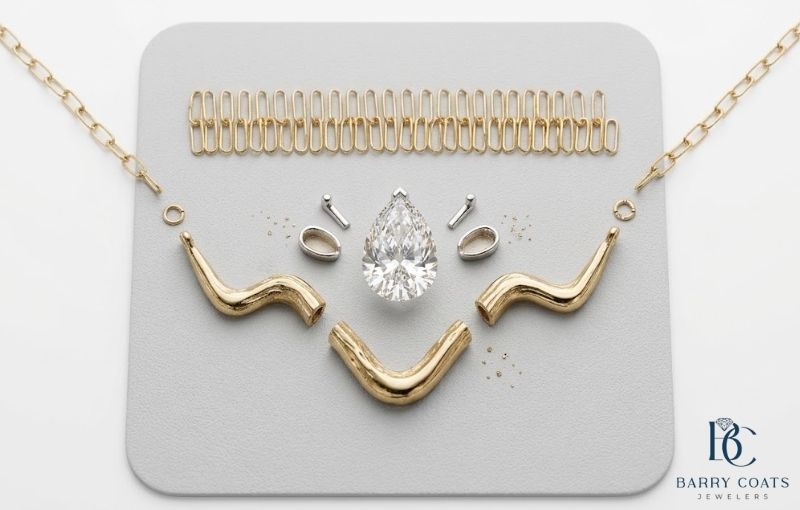
At Barry Coats Jewelers, we offer custom jewelry design services. If you have a specific diamond shape or clarity preference, our team can create a custom setting that highlights your gem’s best features.
Conclusion
Finding the ideal clarity grades diamond necklace comes down to your personal priorities and budget. While flawless diamonds offer extreme rarity, gems with VS SI clarity deliver identical beauty to the naked eye at a much friendlier price point. When you pair good clarity with excellent cut quality, your diamond will sparkle brightly from across any room.
Stop by Barry Coats Jewelers in Livingston, Texas, to view our collection of fine diamond pendants, lab-grown gems, and custom necklaces.
Frequently Asked Questions
Does diamond clarity affect sparkle directly?
Clarity only reduces sparkle if the inclusions are large, dense, or cloudy enough to block light from moving through the gem. In most stones rated SI or higher, cut quality has a far greater effect on sparkle than clarity.
Is an SI clarity diamond good enough for a pendant necklace?
Yes. An SI1 diamond is usually eye-clean, meaning you cannot see the flaws without magnification. Because necklaces are viewed from a slight distance, an SI diamond will look bright and clear.
What does eye-clean mean in diamond jewelry?
An eye-clean diamond is a stone that has no inclusions or blemishes visible to the naked human eye when viewed from about six to twelve inches away under normal light.
Are lab-grown diamonds graded on the same clarity scale?
Yes. Lab-grown diamonds go through the exact same grading process as mined diamonds. They are inspected under 10x magnification and receive clarity scores ranging from Flawless down to Included.
Visit Barry Coats Jewelers in Livingston, Texas, or reach out to our knowledgeable team today to find the perfect diamond necklace for your collection.