
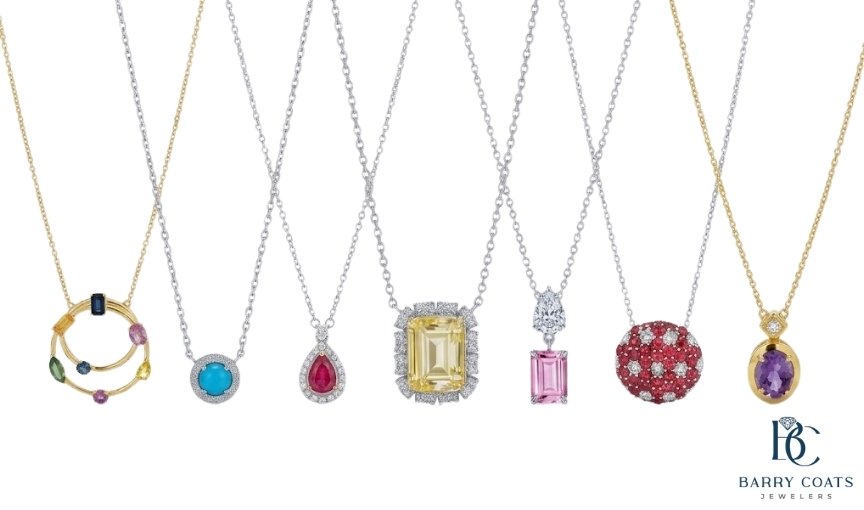
Guide to Color Grades for Pendants
Key Takeaways
- Color grades measure the amount of noticeable body color present in a diamond or gemstone.
- Metals like yellow gold or rose gold pair naturally with warmer stone shades.
- Pendants hang away from direct eye contact, making minor color differences less visible than in rings.
- Barry Coats Jewelers helps you balance color preferences with your overall budget.
Shopping for a necklace pendant involves several decisions, from setting style to stone size. Understanding color grade necklaces helps you select a centerpiece that looks great against your skin and clothing. At Barry Coats Jewelers, helping you find the right balance of beauty and budget is always a priority.
Why Gemstone Color Grades Matter for Pendants
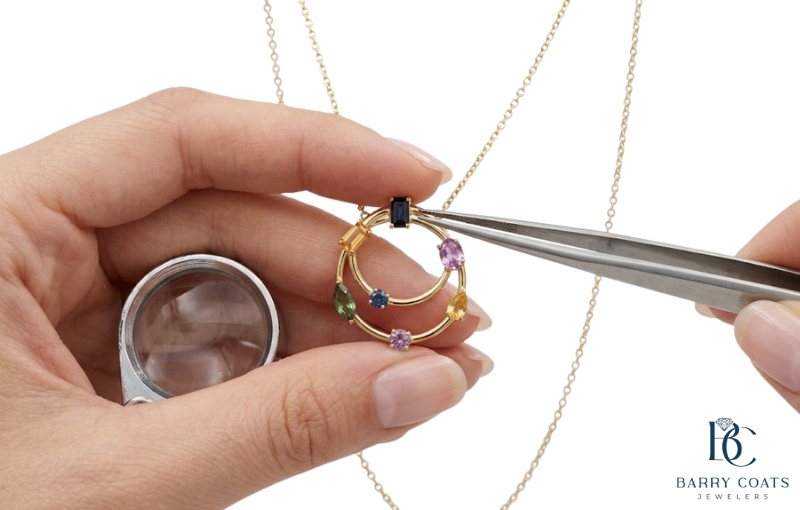
Gemstone color grades measure the presence of trace color within a stone. For diamonds, color scales run from clear to noticeable yellow or brown tints. Because a pendant rests on your chest, light hits it differently than it does a ring on your hand.
Here are main reasons why color evaluation matters:
- Visual Contrast: The metal setting and your clothing choices affect how stone color appears to observers.
- Personal Style: Some buyers prefer icy tones, while others like soft, warmer shades.
- Budget Management: Selecting a slightly lower grade can free up your budget for a larger carat size or custom setting.
Understanding the Colorless Diamond Scale
The industry standard scale ranks diamonds from D (completely clear) to Z (noticeable color). The colorless diamond scale includes grades D, E, and F.
Features of D-F graded stones include:
- D Grade: Completely clear with zero visible body tint under strict laboratory conditions.
- E Grade: Very faint trace color that only gemologists detect under bright lights.
- F Grade: Slight body color visible under laboratory magnification, but clear to the naked eye.
These grades are popular for fine jewelry, but they also carry higher price tags due to their rarity.
Selecting Near Colorless Gems for Value
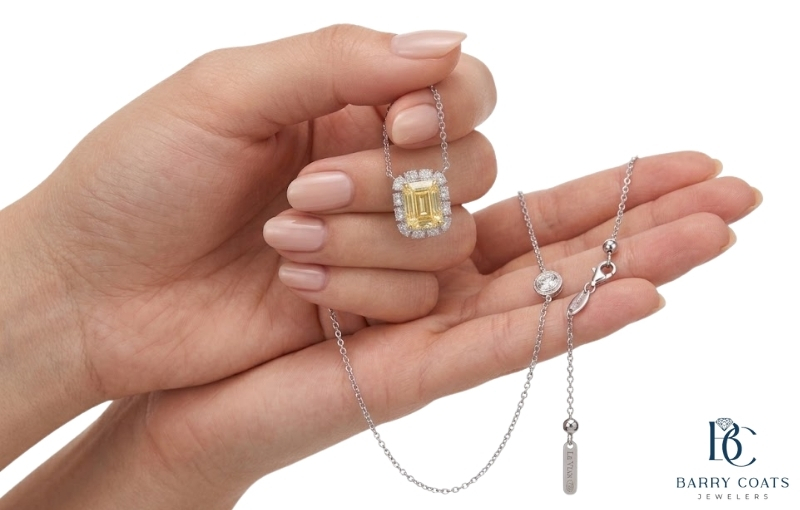
Near colorless gems fall into the G through J grading range. These options give you a clear appearance while offering significant savings.
Benefits of selecting near colorless gems:
- Cost Savings: You spend less money per carat compared to D-F grades.
- Great Face-Up Appearance: Once set into a pendant, G and H stones usually look clear to observers.
- Versatility: They look balanced when set in white gold, platinum, or sterling silver.
Pro Tip: Pendants face outward on the neck and catch constant movement. This motion makes tiny color variations almost impossible to spot without professional tools.
Pairing Metals with Warm Tone Stones
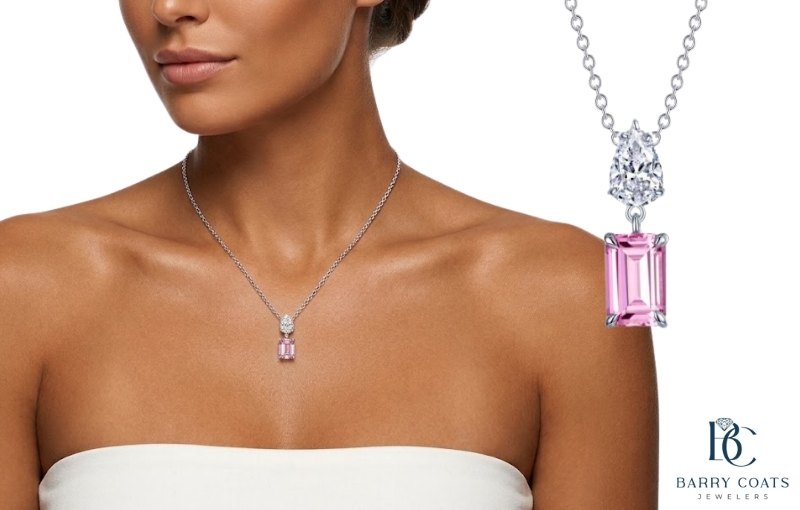
Stones graded K through Z are often categorized as warm tone stones. These gems show soft yellow, straw, or champagne tints. Selecting these stones can open up creative design choices when matched with the right metal.
Consider these metal pairings for warmer shades:
- Yellow Gold: Complements warm tone stones by blending yellow undertones into the setting.
- Rose Gold: Adds a warm vintage appearance that pairs nicely with brown or soft honey undertones.
- Platinum or White Gold: Provides a sharp contrast if you want to highlight warm body color as a deliberate feature.
Whether you choose earth-mined diamonds, lab-grown diamonds, or sterling silver options, matching stone warmth to metal color creates a balanced piece.
How Pendant Settings Affect Color Appearance
The way a diamond or gemstone is mounted directly changes how light passes through it. The physical shape of the mounting can mask or emphasize internal tones.
Setting features to keep in mind:
- Bezel Settings: Encircle the outer edge of the stone with metal, which can reflect the metal shade into the gem.
- Prong Settings: Allow extra light to enter from the sides, helping stones reflect brightness.
- Halo Settings: Surrounding a center stone with small, bright accent stones can alter how white the center stone appears by comparison.
When designing custom jewelry or purchasing a ready-made piece, team members at Barry Coats Jewelers can show you how different settings change stone appearance.
Comparing Diamond Color Ranges
The table below breaks down standard color categories, visual features, and recommended metal types:
| Grade Category | Scale Letters | Appearance Details | Recommended Metal |
|---|---|---|---|
| Colorless | D, E, F | Clear, icy look | White Gold, Platinum, Sterling Silver |
| Near Colorless | G, H, I, J | Soft warm tint, clear to untrained eyes | Yellow Gold, White Gold, Rose Gold |
| Warm Tones | K, L, M | Noticeable soft yellow or brown warmth | Yellow Gold, Rose Gold |
| Faint Color | N through Z | Distinct pale yellow tone | Yellow Gold |
Practical Tips for Buying a Pendant
When shopping for a pendant, keep these practical points in mind:
- Consider Pendant Distance: People view pendants from a greater distance than rings, so minor body color differences matter less.
- Balance the Four Cs: If you want a larger stone within a specific budget, consider dropping down one or two color steps.
- Check Stone Shape: Round brilliant cuts reflect light well and hide color better than step-cut shapes like emerald or baguette cuts.
- Think About Daily Wear: Necklaces worn daily over shirts gain background contrast, while pendants worn directly against skin look different based on skin tone.
Frequently Asked Questions
Can you see color differences in small pendant stones?
Smaller stones show less color concentration than larger stones. On smaller accent gems or petite solitaire pendants, color differences between adjacent grades like F and G are rarely noticeable to the naked eye.
Which metal hides yellow tones in a diamond best?
Yellow gold tends to mask slight yellow undertones best because the metal color blends naturally with the gem. White metals highlight slight color contrast instead.
Are lab-grown diamonds graded on the same color scale?
Yes. Lab-grown diamonds use the exact same grading scale as earth-mined diamonds, ranging from D to Z for color.
Does pendant size change how color looks?
Yes. Larger stones hold more surface area, which makes body color more visible. If you are buying a stone over one carat, color selection becomes a larger factor in your decision.
Final Thoughts
Finding the best match depends on your personal taste, metal preference, and budget goals. Whether you favor clear stones or warm tone stones, selecting a pendant should fit your daily wear needs. Visit Barry Coats Jewelers to view various gemstone options in person and choose the ideal piece for your collection.
Visit Barry Coats Jewelers in Livingston, Texas, or contact our experienced team today to browse our full collection of pendants, custom jewelry designs, and fine gemstones.