
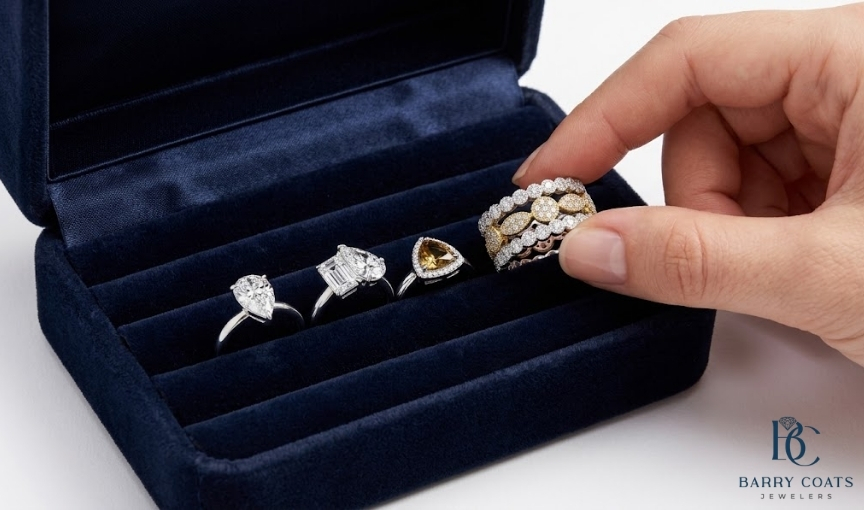
Best Habits for Proper Ring Storage
Your fine rings carry deep sentimental meaning and lasting beauty. Whether you own family heirlooms, wedding bands, or diamond rings, keeping them safe when they leave your finger is necessary. Practicing proper ring storage stops accidental scratches, prevents bent prongs, and protects delicate settings from daily hazards.
When you toss your jewelry onto a nightstand or leave it next to a sink, you risk damage or loss. Taking a few simple steps each day helps maintain the shine and structure of your precious pieces. Barry Coats Jewelers shares these practical steps to help you care for your collection with confidence.
Key Takeaways
- Store different metals separately to avoid scratches and surface marks.
- Use fabric-lined compartments or padded slots instead of loose dishes.
- Keep fine rings away from humid rooms like bathrooms.
- Clean away oils and dirt before placing rings in long-term containers.
- Schedule regular professional checkups to keep prongs and settings tight.
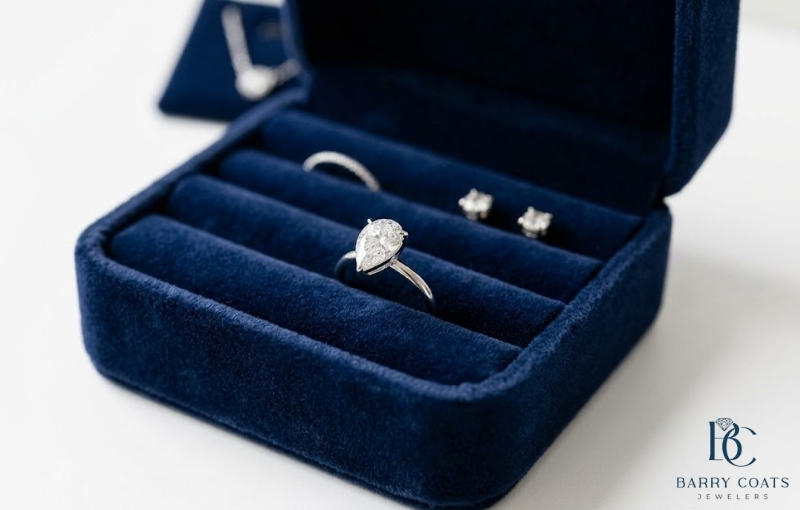
Why Proper Storage Protects Fine Jewelry
Fine metals like yellow gold, white gold, rose gold, and platinum are durable, but they are not indestructible. Daily contact with hard surfaces or other gemstones can lead to avoidable wear.
A loose diamond can easily scratch gold or even another diamond. Settings can loosen when rings rub against each other inside a drawer. Moisture and open air also cause certain metals, like sterling silver, to tarnish and discolor over time. Storing your jewelry correctly shields it from dust, pet accidents, drops, and chemical exposure.
Smart Jewelry Box Organization for Every Metal
A good storage system starts with dividing your pieces. Good jewelry box organization keeps your bands separated and easy to find whenever you want to wear them.
Use Ring Rolls and Padded Slots
Loose storage invites trouble. When rings slide around inside a flat drawer, bands bang against each other.
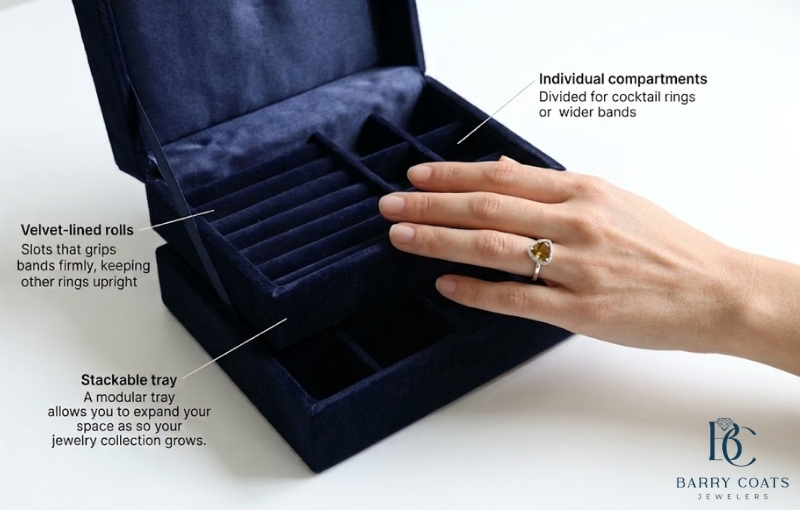
- Velvet-lined rolls: These slots grip the band firmly, keeping the ring upright so the head and center stone never touch other items.
- Individual compartments: Small, divided cubbies allow you to store cocktail rings or wider bands on their own soft surface.
- Stackable trays: Modular trays allow you to expand your space as your jewelry collection grows over the years.
Separate Hard Stones from Soft Metals
Hardness varies across gemstones and metals. Diamonds rate as the hardest natural mineral, which means they can scratch softer stones like emeralds, pearls, and opals. They can also gouge gold and platinum bands.
- Keep diamond rings in their own distinct slots.
- Store plain metal wedding bands away from stones with sharp corners.
- Place delicate gem rings in soft cloth envelopes before placing them inside your case.
The table below outlines the recommended storage conditions for common metals and gemstones:
| Material Type | Primary Risk | Recommended Storage Solution | Extra Care Note |
|---|---|---|---|
| Yellow & Rose Gold | Surface scratches, dents | Padded ring rolls, velvet trays | Keep separate from diamonds |
| White Gold | Rhodium wear, scuffs | Fabric-lined individual slots | Avoid contact with harsh chemicals |
| Platinum | Surface patina, minor dings | Dedicated ring slot | Highly durable, but can scratch softer gold |
| Sterling Silver | Rapid oxidation, tarnishing | Lined boxes or sealed containers | Keep in low-humidity environments |
| Diamonds | Chipping corners, scratching others | Solitary padded slots | Can scratch all other gems and metals |
| Pearls & Soft Gems | Surface gouging, cracking | Individual soft cloth wraps | Never store in airtight plastic bags |
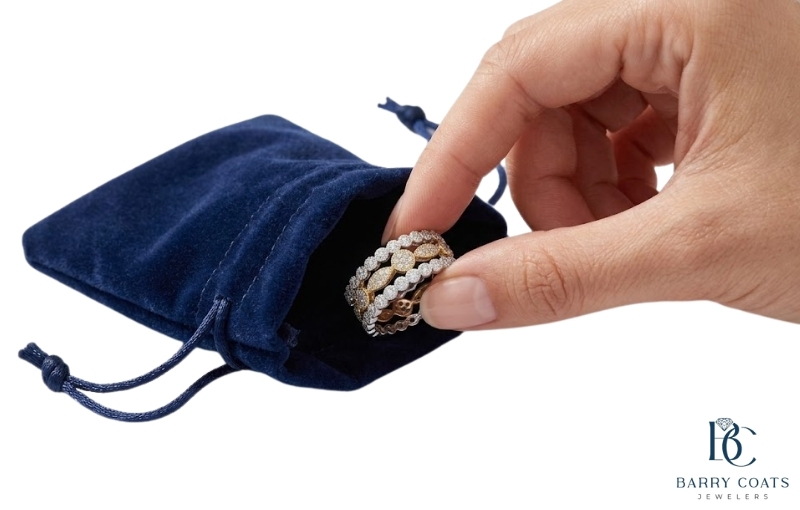
Using Anti Tarnish Pouches and Fabric Wraps
Air and moisture are natural enemies of silver and certain gold alloys. Adding anti tarnish pouches to your setup provides a barrier against humidity and sulfur in the atmosphere.
Pro Tip: If you live in a humid climate, place a small packet of silica gel inside your jewelry box. It absorbs excess moisture from the air and keeps your metals bright.
- Treated Cloth Bags: These bags contain special compounds that absorb airborne sulfur before it reacts with your rings. They work well for sterling silver bands and silver fashion rings.
- Microfiber Wraps: Wrapping larger rings in microfiber keeps dust away and cushions the mounting during moves or seasonal storage.
- Acid-Free Tissue Paper: If you need to pack rings away for an extended time, wrap each piece in acid-free tissue paper. Regular paper contains sulfur compounds that can darken metals.
Safe Keeping Habits at Home and on the Go
Building steady safe keeping habits prevents the sudden panic of misplacing your favorite band. Most ring losses happen during routine household chores or unexpected travel.
Dedicated Drop Dishes in Safe Spots
Taking off your ring while doing dishes or working with hand tools protects the band from bending. However, leaving it on the counter invites loss down the drain.
- Place a ring dish in your bedroom, away from vents or trash cans.
- Keep a dish by the kitchen sink, set back at least two feet from the drain opening.
- Avoid keeping jewelry dishes in the bathroom; shower steam creates high humidity that promotes tarnish and residue buildup.
Travel Storage Solutions
Never drop loose rings into a toiletry bag or purse pocket. Keys, coins, and cosmetic tubes can dent settings or bend delicate prongs.
- Invest in a compact, zippered travel case with firm internal ring bars.
- Keep fine jewelry in your carry-on bag rather than checked luggage.
- Fasten your rings inside the travel case as soon as you remove them in your hotel room.
When to Visit Barry Coats Jewelers for Maintenance
Even with careful storage habits at home, rings benefit from regular inspection. Everyday wear can loosen prongs, wear down shank thickness, or trap lotions under gemstone mountings.
Barry Coats Jewelers provides professional cleaning, prong inspections, and complete repair services. Having a jeweler check your settings once or twice a year makes certain that your stones stay secure inside their mountings. If you notice a stone wiggling or feel a rough catch on your clothing, stop wearing the ring and bring it in for service.
Frequently Asked Questions
Should you store diamond rings together?
No. Diamonds can easily scratch other diamonds as well as gold, silver, and platinum bands. Each diamond ring should sit in its own padded slot or individual fabric pouch so the stones do not touch.
How do anti tarnish pouches protect silver rings?
These pouches are treated with materials that trap and neutralize sulfur and moisture in the air. By blocking these elements, the cloth stops the chemical reaction that causes silver to turn black or dull.
Is it safe to keep rings in the bathroom?
No. Bathrooms experience constant temperature swings and high humidity from showers. This moisture can cause metals to tarnish faster and may degrade certain porous gemstones like pearls or opals.
What is the best way to clean rings before storing them?
Wash the ring gently in warm water mixed with mild dish soap. Use a soft-bristled brush to remove skin oils and lotion from behind the stone. Dry the piece completely with a lint-free cloth before placing it into your storage box.
Keep Your Rings Protected for Generations
Building simple daily storage habits preserves the shine, strength, and sentimental value of your fine jewelry. By using divided boxes, soft fabrics, and dry locations, you protect your rings from preventable wear. For professional inspections, jewelry cleaning, or custom adjustments, visit Barry Coats Jewelers in Livingston, Texas. Our experienced team is always here to help you care for your most cherished pieces.