
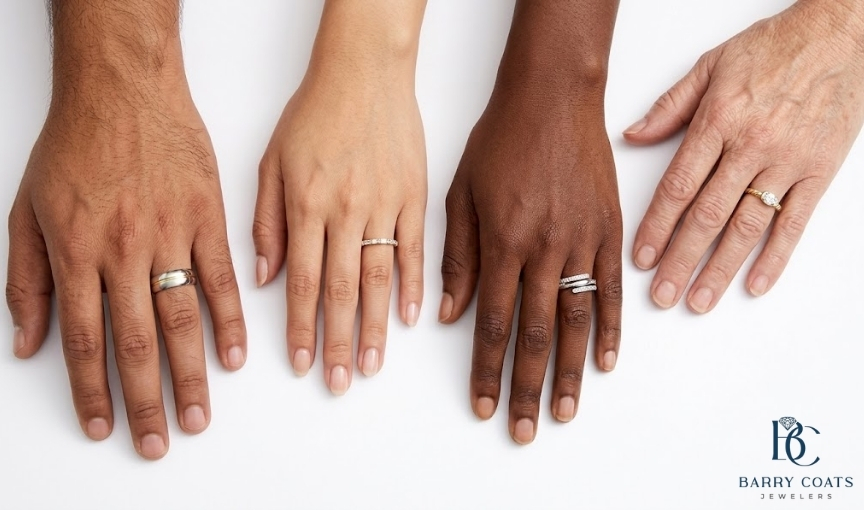
Simple Habits for Avoiding Ring Damage
Your rings carry deep personal meaning, marking milestones, commitments, and family memories. Whether you wear a classic diamond solitaire, a wedding band, or a custom heirloom, daily routines can take a heavy toll on precious metals and gemstones. Practicing smart habits for avoiding ring damage is the best way to keep your jewelry secure, bright, and intact for generations. Schedule regular checkups with Barry Coats Jewelers to catch loose prongs early.
Simple adjustments to your daily routine can prevent bent bands, loose stones, and scratched surfaces before they happen.
Key Takeaways
- Remove your jewelry before cleaning, lifting weights, or doing heavy yard work.
- Keep safe storage dishes in rooms where you often take off your pieces.
- Harsh household chemicals can weaken precious metals like white gold, yellow gold, and rose gold.
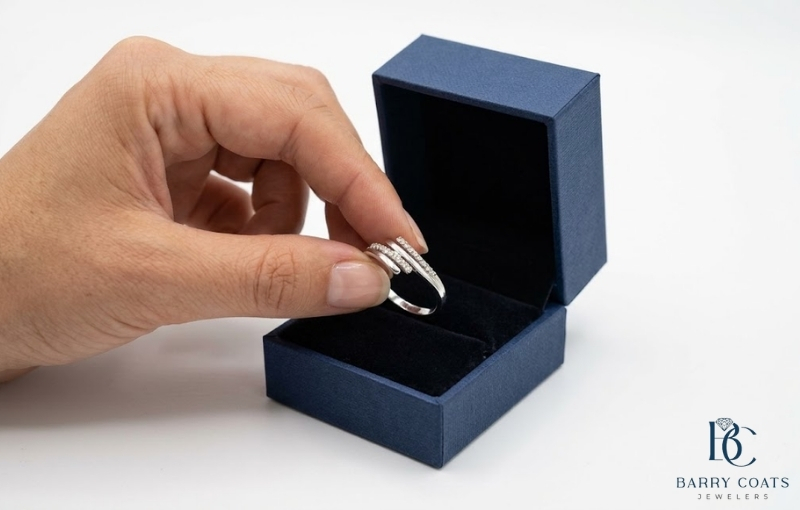
Daily Wear Precautions for Busy Hands
Everyday life brings constant friction between your hands and the objects you touch. Simple adjustments in how you handle your jewelry will dramatically lower the chances of accidental harm.
The “Last On, First Off” Rule
One of the most effective daily wear precautions is making your jewelry the last item you put on in the morning and the first item you take off at night.
- Morning routines: Apply hairspray, perfume, makeup, and lotions first. Allow these products to dry completely on your skin before putting on your rings.
- Evening routines: Remove your rings before washing your face, applying heavy night creams, or getting into bed.
- Sleep risks: Wearing rings to bed can snag delicate prongs on blankets and sheets. Over time, that pulling force can loosen diamonds and accent stones.
Establish Safe Storage Zones
Never set a ring down on an open counter or near a sink drain. If you take off your ring to wash your hands or prepare food, put it in a designated dish.
- Place small ring dishes next to the kitchen sink, in the bathroom, and on your nightstand.
- Avoid wrapping rings in paper towels or tissues, as family members may accidentally toss them into the trash.
- Keep a soft pouch in your purse or gym bag for times when you must take rings off while away from home.
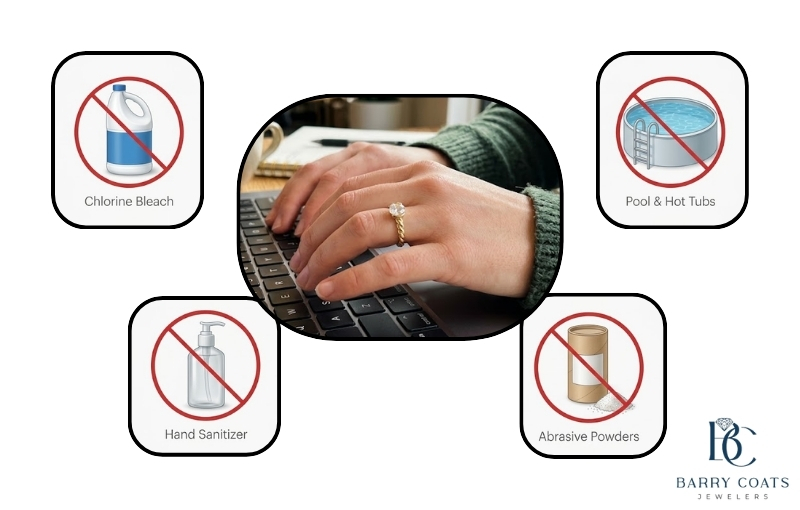
Chemical Exposure Risks in the Home
Many household products seem harmless, but they can attack the alloys in fine jewelry. Gold is naturally soft, so jewelers mix it with other metals to give it strength. Certain chemicals break down these alloys, leading to pitted surfaces or brittle prongs.
| Common Substance | Common Location | Risk to Rings | Best Action |
|---|---|---|---|
| Chlorine Bleach | Laundry, cleaning sprays | Weakens gold alloys; discolors platinum mountings | Remove rings and wear rubber gloves. |
| Pool & Hot Tub Water | Swimming facilities | Corrodes prongs; causes sudden stone loss | Store rings securely in a jewelry box before swimming. |
| Hand Sanitizer | Pocket dispensers, desks | Dulls gemstone shine; dries out organic gems | Rub hands until completely dry before sliding rings back on. |
| Abrasive Powders | Kitchen and bathroom scrubs | Scratches metal polish; dulls facet edges | Take off all fine jewelry before deep cleaning. |
Managing Cleaners and Cosmetics
Household tasks introduce major chemical exposure risks that many owners overlook.
- Cleaning agents: Bleach, ammonia, and bathroom cleaners attack prong tips. Even brief contact can weaken the metal structure over time.
- Cosmetics and lotions: Lotions do not always break metal, but they form a thick film beneath diamonds. This film blocks light reflection and makes the stone look cloudy.
- Hand sanitizers: Frequent use of alcohol-based sanitizers leaves residue on the metal band. This dulls the shine of yellow gold, white gold, and rose gold.
Pro Tip: If your ring comes into contact with harsh cleaners, rinse it right away under warm running water. Plug the drain first to prevent accidents.
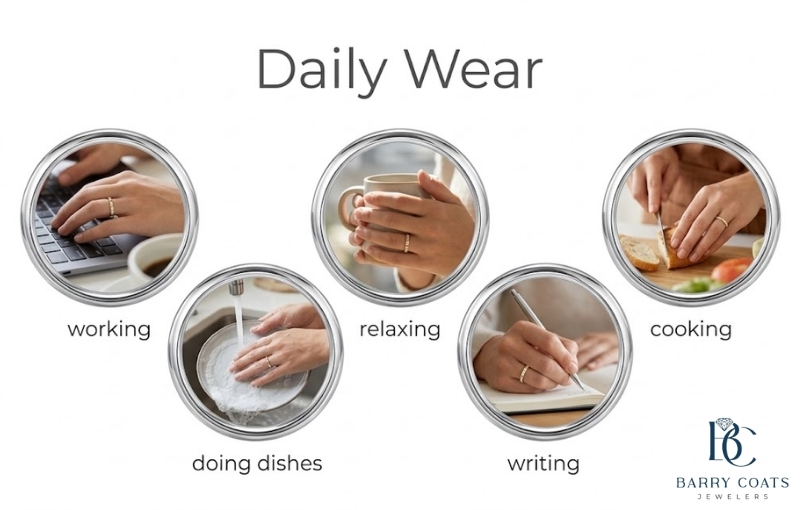
Physical Impact Protection During Activities
Precious metals can bend when subjected to direct force. Protecting your rings from blunt force keeps settings aligned and stones locked in place.
| Daily Impact Levels | |
|---|---|
| High Risk | Weightlifting, rock climbing, gardening, moving furniture |
| Medium Risk | Dishwashing, cooking, light yard work, yoga |
| Low Risk | Office work, reading, daily walking |
Fitness and Sports
Gym equipment is one of the leading causes of bent shanks and cracked stones. Steel dumbbells and barbells press hard against metal rings, which can warp the circular shape of your band.
- Take off your rings before lifting free weights or using resistance machines.
- Avoid wearing fine rings during contact sports or outdoor rock climbing.
- Consider switching to a silicone band while working out to keep your finger safe and protect your fine jewelry.
Heavy Yard Work and Gardening
Gardening introduces two dangers at once: hard impacts against rocks and abrasive grit from soil.
- Dirt contains tiny quartz particles that act like sandpaper against gold and platinum.
- Pulling weeds or handling metal shovels can pull prongs back, allowing diamonds to slip free.
- Store your jewelry in a safe box indoors before putting on heavy gardening gloves.
Metal and Stone Care Differences
Different materials handle wear in distinct ways. Knowing what your ring is made of will help you care for it correctly.
- Platinum: Extremely durable. It does not wear away when scratched; instead, the metal shifts slightly, creating a soft patina.
- Yellow and White Gold: Traditional and classic, but softer than platinum. White gold features a rhodium finish that requires periodic replating to keep its bright color.
- Rose Gold: Contains copper for its warm tone. While durable, it remains vulnerable to chlorine damage.
- Diamonds and Lab-Grown Diamonds: These rank at a 10 on the Mohs hardness scale, making them resistant to scratches. However, a hard blow along the edge can still chip them.
- Colored Gemstones: Stones like emeralds, opals, and pearls are softer and porous. They require extra care around water, heat, and chemicals.
Building a Professional Maintenance Habit
Home care is only half the battle. Regular checks from a trusted local jeweler keep small problems from turning into lost gems.
- Check prongs at home: Hold the ring close to your ear and tap it gently with your fingernail. If you hear a rattle, the stone is loose.
- Examine prongs visually: Look at the setting under a bright light. If any prong looks thin, lifted, or caught on fabric, stop wearing the piece until it is inspected.
- Schedule routine cleaning: Professional ultrasonic and steam cleaning removes stubborn dirt from hidden corners under the diamond.
- Rely on local experts: Barry Coats Jewelers offers complete jewelry and watch repair, prong retipping, ring resizing, and professional cleanings to keep your pieces secure.
Frequently Asked Questions
Can hand sanitizer damage diamond rings?
Hand sanitizer will not destroy a diamond, but repeated use leaves a cloudy film over the stone and metal. Over time, the ingredients can also dry out softer gems and dull the shine of your setting.
Is it safe to wear rings while washing dishes?
It is best to take your rings off before doing dishes. Soapy water makes fingers slippery, increasing the risk of a ring sliding down the drain. Sponges and hard dish surfaces can also scratch softer gold bands.
How often should Barry Coats Jewelers check my ring?
You should have your fine jewelry inspected at least once every six months. The experienced team at Barry Coats Jewelers can examine your prongs, check stone security, and clean your jewelry to maintain its original beauty.
What should I do if my ring bends out of shape?
Do not try to bend the ring back into shape with your fingers or household tools, as this can snap the metal. Take the piece directly to a professional bench jeweler for proper reshaping and prong verification.
Protect your favorite rings for years to come. Visit Barry Coats Jewelers in Livingston, Texas, for walk-in jewelry repair, prong inspections, and professional cleaning services.