
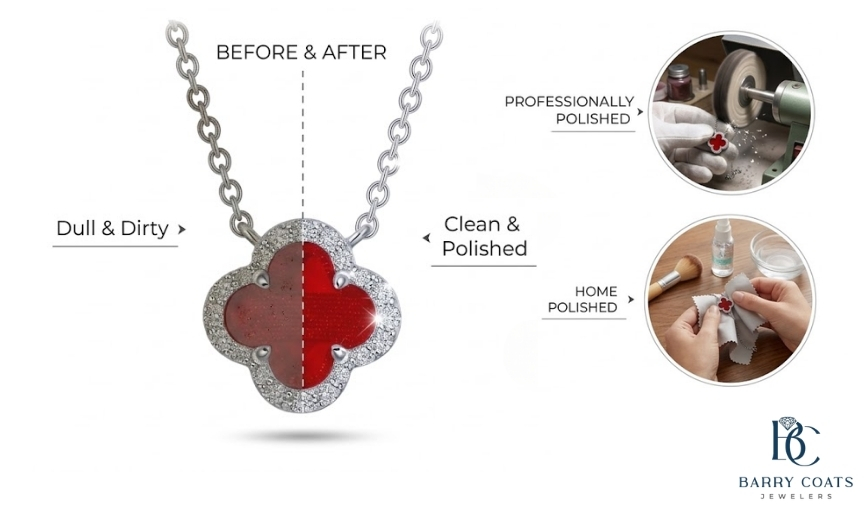
Professional Necklace Polish & Care Benefits
our favorite necklaces pick up dirt, oils, and minor abrasions through everyday wear. Over time, daily lotions, perfumes, and natural skin oils can dull precious metals and leave gemstones looking flat. Scheduling a professional necklace polish and cleaning restores the original shine of your chains and pendants while keeping delicate clasps secure. At Barry Coats Jewelers, routine care helps you protect your favorite investments and keep your jewelry looking fresh.
Key Takeaways
- Regular store cleanings remove stubborn buildup that home methods cannot wash away safely.
- Expert buffing eliminates surface scuffs without weakening delicate chain links.
- Periodic checkups let jewelers inspect clasps, prongs, and settings for hidden wear.
- Specialty metals like white gold benefit from routine protective coatings.

Why Routine Jewelry Care Matters for Your Necklaces
Necklaces sit directly against your skin for hours at a time. Sweat, dust, and beauty products slowly settle into chain links, behind gemstone mountings, and inside clasps.
Here is what happens to necklaces over time without proper care:
- Surface dullness: Dirt forms a thin film over gold, platinum, and silver, blocking light reflection.
- Grime buildup: Hidden residue gathers inside small links and hollow settings.
- Weakened parts: Abrasive dirt acts like sandpaper inside moving joints, speeding up clasp and link wear.
- Skin reactions: Trapped soap and cosmetic residue behind pendants can cause mild skin irritation.
By bringing your jewelry to Barry Coats Jewelers, you let experienced professionals check for mechanical issues while giving your items a deep, safe refresh.
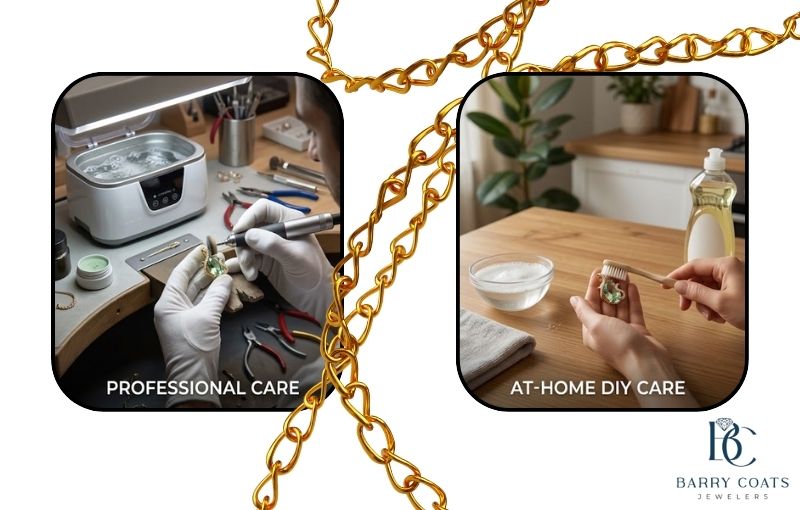
Comparing Deep Clean Options: Home Methods vs. Professional Care
Many people try to wash chains in their kitchen sink using dish soap, baking soda, or store-bought liquids. While light home maintenance helps between store visits, it cannot replace commercial tools. Understanding your deep clean options will keep you from accidentally damaging delicate metal finishes or soft stones.
| Feature | Home Cleaning | Professional Service |
|---|---|---|
| Equipment Used | Soft brushes, mild soap, warm water | Commercial ultrasonic baths, steam cleaners |
| Scratch Treatment | Cannot remove scratches | Wheel buffing and polishing compounds |
| Safety Level | Risky for soft gems or loose stones | Inspected first under magnification |
| Deep Dirt Removal | Cleans surface only | Dislodges packed grease inside tiny links |
| Structural Check | None | Full inspection of clasps, joints, and prongs |
The Risks of Harsh Home Remedies
You should avoid harsh home cleaners. Common DIY methods can permanently damage your favorite chains:
- Toothpaste: Abrasives in paste leave tiny micro-abrasions across high-polish gold surfaces.
- Baking Soda and Foil: This chemical bath strips protective factory finishes and damages porous stones.
- Bleach and Chlorine: Chemicals break down alloy metals, making gold brittle and prone to snapping.
- Rough Paper Towels: Wood fibers in paper towels scratch soft metals like sterling silver and yellow gold.
Pro Tip: For safe home maintenance between visits, wipe your pieces with a clean microfiber cloth each evening to remove surface oils.
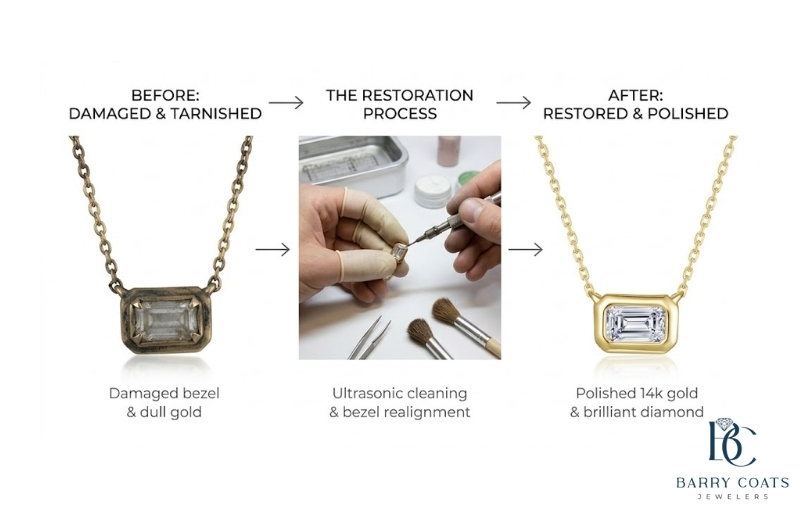
Metal Scratch Removal and Chain Restoration
Everyday movement causes necklaces to rub against buttons, zippers, and other pieces of jewelry. Over time, smooth chains develop tiny scratches that make the metal look cloudy.
How Metal Scratch Removal Works
Professional buffing uses specialized wheels and jewelers’ compounds to smooth out rough spots. The process includes several precise steps:
- Visual assessment: The jeweler checks the metal thickness to confirm the piece can handle buffing.
- Rough prep: A firmer wheel and compound smooth out deeper contact marks.
- Final polish: A soft muslin wheel with a fine rouge compound restores a mirror-like finish.
- Rinse and dry: Steam cleaning removes leftover polishing compound from every crevice.
This smoothing process works well on various metals, including yellow gold, rose gold, sterling silver, and platinum.
White Gold Care: The Rhodium Replating Service
White gold is naturally warm in tone because it contains pure yellow gold mixed with white metals. Jewelers coat white gold pieces with rhodium, a rare metal from the platinum family, to give them a crisp, mirror-white sheen.
[ Natural White Gold Core ]
+
[ Electroplated Rhodium Layer ]
=
[ Mirror-White, Scratch-Resistant Finish ]
When you wear a white gold necklace daily, friction slowly wears this thin barrier away, especially around clasps and pendant bails. A professional rhodium replating service renews this top coat through electroplating. This service restores the bright white luster and adds a light protective shield against everyday scuffs.
Complete Inspection During Your Professional Cleaning
A professional cleaning visit is about more than just good looks; it also protects your investment from sudden loss. While your necklace is in the workshop, trained eyes review every critical part.
Here are the main components checked during a service visit:
- Clasp spring tension: Spring rings and lobster claws can lose tension over time, leading to accidental opening.
- Jump ring joints: The small rings connecting the chain to the clasp can stretch open or wear thin.
- Prongs and bezels: Gemstone mountings on pendants can bend, loosen, or snag on clothing fibers.
- Chain link thinning: Points where links rub together slowly wear down, which can lead to unexpected breaks.
Catching these issues early helps you avoid losing a sentimental pendant or an expensive diamond cross.
How Often Should You Clean Your Necklaces?
How frequently you visit the jeweler depends on how often you wear each piece and your daily routine:
- Daily chains: Clean professionally every six months to clear away sweat and cosmetic buildup.
- Fine gemstone pendants: Clean every six to twelve months to keep stones tight and prongs safe.
- Occasional wear pieces: Clean once a year or before important social gatherings.
Frequently Asked Questions
Can ultrasonic cleaning damage any gemstones?
Yes. Ultrasonic machines use rapid sound waves through liquid to shake dirt loose. These vibrations can crack treated stones, heat-sensitive gems, or porous stones like pearls, opals, emeralds, and turquoise. Professional jewelers inspect your materials first and clean fragile gems by hand instead.
Does polishing remove metal from my chain?
Polishing works by smoothing the microscopic high points of metal around a scratch. While this removes a tiny amount of metal, trained jewelers use light pressure so your chain stays strong and structurally sound.
How long does a routine cleaning take?
A basic clean and steam rinse can often be finished in just a few minutes while you wait. If your necklace needs a deep hand buffing, link repair, or a fresh rhodium coating, it may take a short workshop stay to complete properly.
Why does silver tarnish faster on some necklaces?
Sterling silver reacts to sulfur in the air, moisture, and individual body chemistry. Perfumes, body lotions, and high humidity speed up tarnish. Storing silver in air-tight pouches and visiting a professional jeweler regularly helps keep the metal bright.
Bring Your Necklaces to Barry Coats Jewelers
Keep your favorite chains, lockets, and diamond pendants in dependable condition. The experienced team at Barry Coats Jewelers provides careful cleaning, scratch buffing, and structural checkups for all your fine jewelry. Stop by our Livingston, Texas store today for walk-in jewelry care and repair services.