
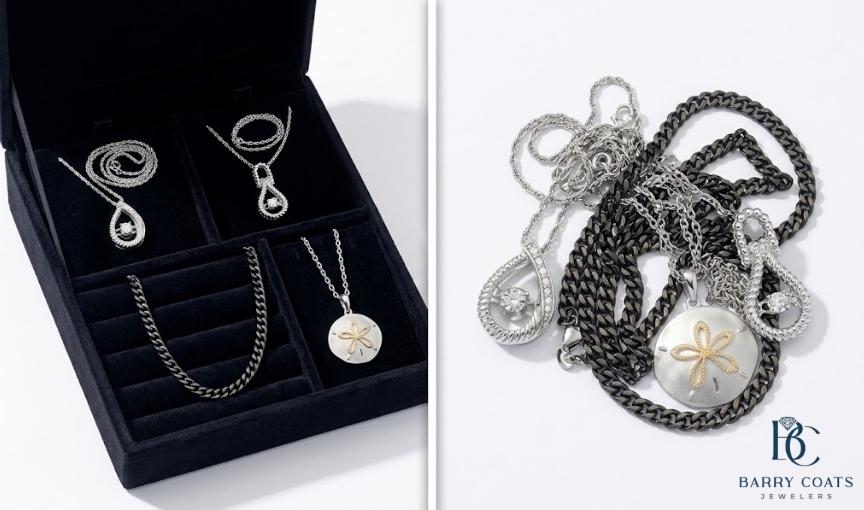
Avoiding Necklace Tangles: Simple Care Tips
Nothing tests your patience quite like reaching for your favorite necklace only to find a tight, messy knot. Thin chains of yellow gold, white gold, and sterling silver can wrap around themselves with the slightest movement. Learning the best habits for avoiding necklace tangles helps protect your delicate pieces from permanent kinks and breaks. With the right care and simple routines, you can keep your jewelry ready to wear every day.
Key Takeaways
- Always fasten clasps before storing or traveling with your chains.
- Vertical hanging methods prevent knots better than flat trays.
- Everyday items like sewing needles and baby oil can loosen stubborn knots safely.
- Persistent or tight knots should go to a professional jeweler to avoid broken links.
Why Delicate Chains Tangle So Easily
Necklace chains consist of tiny, flexible links that slide against one another. When left loose in a drawer, box, or travel bag, friction and motion cause the links to twist together.
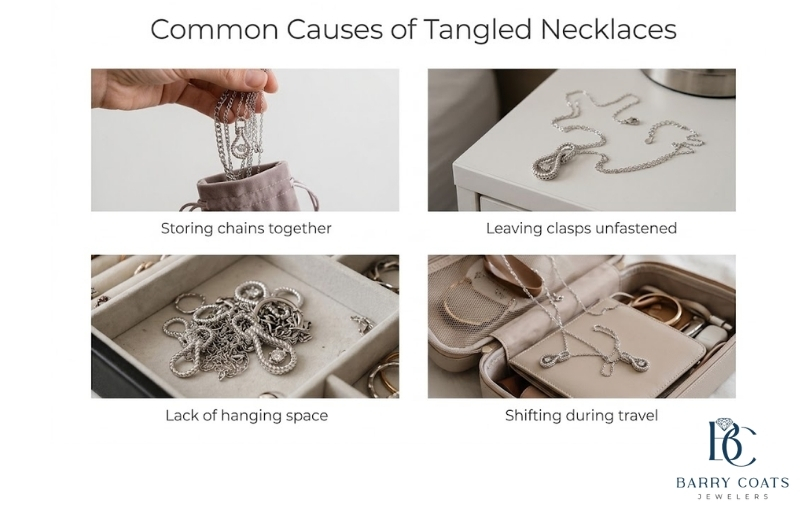
Common causes of tangled necklaces include:
- Storing multiple chains together in a single pouch.
- Leaving clasps unfastened during storage.
- Using jewelry boxes that lack dedicated hanging space.
- Shifting during travel or daily movement.
Different materials, such as platinum, rose gold, and sterling silver, share this vulnerability when thin link patterns are used. Caring for them properly stops unnecessary stress on the metal.
Chain Storage Hacks for Home Organization
Organizing your jewelry at home does not require complex equipment. Setting up a neat station will save you time and protect your pieces from damage.
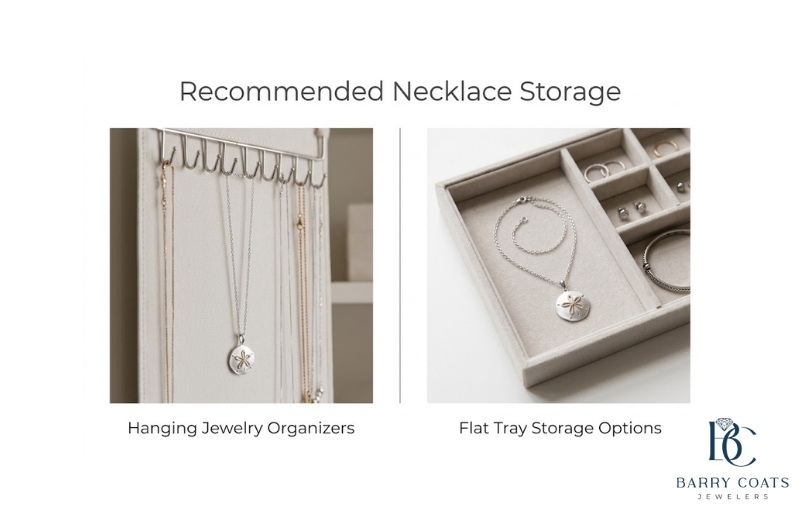
Using Hanging Jewelry Organizers
Gravity is your best friend when it comes to keeping necklaces straight. Hanging jewelry organizers allow each chain to hang straight down, which stops links from overlapping.
Here are a few practical ways to store chains vertically:
- Wall-mounted jewelry racks with individual hooks.
- Free-standing jewelry trees placed on a dresser.
- Padded necklace boards set inside a closet.
- Small adhesive hooks mounted inside a cabinet door.
When you use hanging systems, make sure to space each chain at least one inch apart. This prevents them from swinging into one another when you open cabinet doors.
Flat Tray Storage Options
If you prefer keeping your jewelry inside drawers, flat trays work well when chosen carefully:
- Pick trays with long, individual compartments for each chain.
- Choose velvet or felt linings to stop items from sliding.
- Fasten the clasp and place only one necklace per slot.
| Storage Method | Best Suited For | Main Advantage | Potential Drawback |
|---|---|---|---|
| Hanging Jewelry Organizers | Daily-wear pieces | Chains stay separated by gravity | Needs wall or shelf space |
| Compartment Trays | Drawers and dressers | Keeps items dust-free | Limited space for long chains |
| Individual Pouches | Travel and small spaces | Portable and soft | Chains can knot if not clasped |
Packing Methods: The Straw Trick Packing Method
Travel is one of the most common times jewelry gets tangled. Movement inside luggage shifts everything around. You can keep your chains straight on the go by using common household supplies.
How the Straw Trick Packing Technique Works
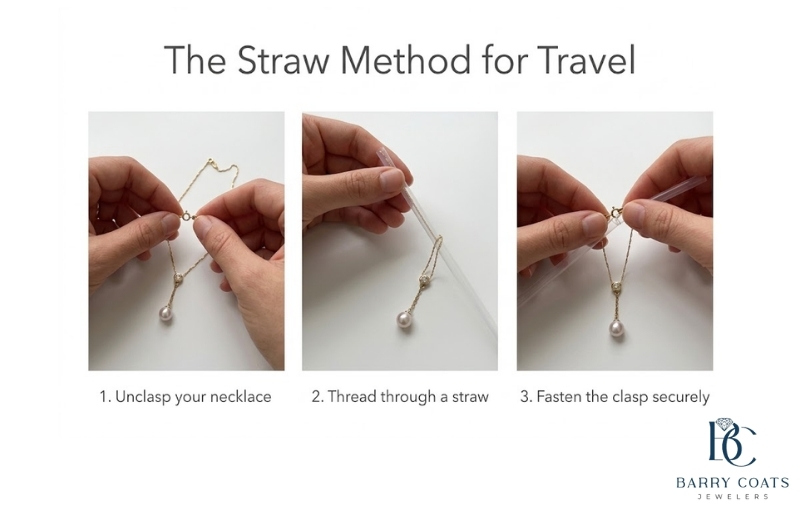
The straw method is an inexpensive, effective way to secure thin chains during travel:
- Unclasp your necklace.
- Thread one end of the chain through a standard drinking straw.
- Pull the end through until it emerges from the other side.
- Fasten the clasp securely outside the straw.
Pro Tip: For shorter necklaces or bracelets, cut the straw to match the length of the chain. For thicker chains, use a wider smoothie straw.
Other Travel Packing Methods
If you do not have drinking straws available, consider these alternatives:
- Cardboard or Index Cards: Cut small slits on the top and bottom of a card, wrap the chain around it, and fasten the back.
- Press-and-Seal Wrap: Lay a chain flat on a sheet of wrap, place another sheet on top, and press the edges together to lock the chain in place.
- Pill Organizers: Place small pendants and clasped chains in separate daily compartments.
How to Safely Untangle a Knotted Necklace
If you already have a knot, do not yank or pull on the chain. Pulling only tightens the knot and may stretch or snap delicate links. Follow these steady steps instead.
Step 1: Work on a flat, well-lit surface.
Step 2: Unclasp the necklace.
Step 3: Apply a drop of lubricant (baby oil or olive oil).
Step 4: Use two fine sewing needles to wiggle the center open.
Step 5: Clean and dry the jewelry completely.
Step-by-Step Untangling Guide
- Find a Hard, Flat Surface: Work on a clean table under good lighting. Avoid working over carpets where dropped pieces can get lost.
- Unclasp the Chain: Opening the clasp removes tension and gives you a free end to pull through loops.
- Add Lubricant: Place a single drop of mineral oil, baby oil, or mild liquid soap directly on the knot. The oil reduces friction between the metal links.
- Use Two Needles: Insert the tips of two sewing needles or safety pins into the center of the knot. Gently pull the needles away from each other to loosen the loop.
- Wash the Chain: Once the knot is free, clean the chain in warm water with mild dish soap to wash away the oil. Pat it dry with a soft cloth.
When to Visit a Professional Jeweler
Some tangles involve multiple chains or extremely tight knots that needles cannot open safely. Forcing the links can damage the metal or ruin the clasp.
Bring the piece to Barry Coats Jewelers when:
- The knot contains more than two intertwined chains.
- The chain shows signs of stretching, bending, or thinning.
- The knot sits right next to the clasp or a delicate gemstone setting.
- You do not feel comfortable working on high-value gold, platinum, or diamond pieces.
Our experienced team at Barry Coats Jewelers in Livingston, Texas, provides complete jewelry repair and jewelry cleaning services to keep your pieces in safe condition.
Frequently Asked Questions
Does baby oil damage gold or silver chains?
Baby oil is safe for solid gold, platinum, and sterling silver. However, you should wash the oil off with warm water and mild soap as soon as the knot is undone. Avoid using oils on porous gemstones like pearls, opals, or turquoise.
Why should I fasten the clasp before storing my necklace?
Leaving the clasp open gives the loose end the freedom to weave through other links and loops. Fastening the clasp creates a continuous loop, which reduces the chance of tight knots.
Can a tangled chain cause links to break?
Yes. Pulling on a knot creates stress on individual links. This tension can stretch the links out of shape, weaken the metal, or cause the chain to snap completely.
What is the best way to untangle multiple necklaces stuck together?
Lay them flat on a table and lubricate the main knot. Focus on separating one chain at a time starting from the loosest outer loop, rather than pulling from the center.
Need help with a stubborn jewelry knot or broken chain? Visit Barry Coats Jewelers in Livingston, Texas, for professional jewelry repair, cleaning, and maintenance.