
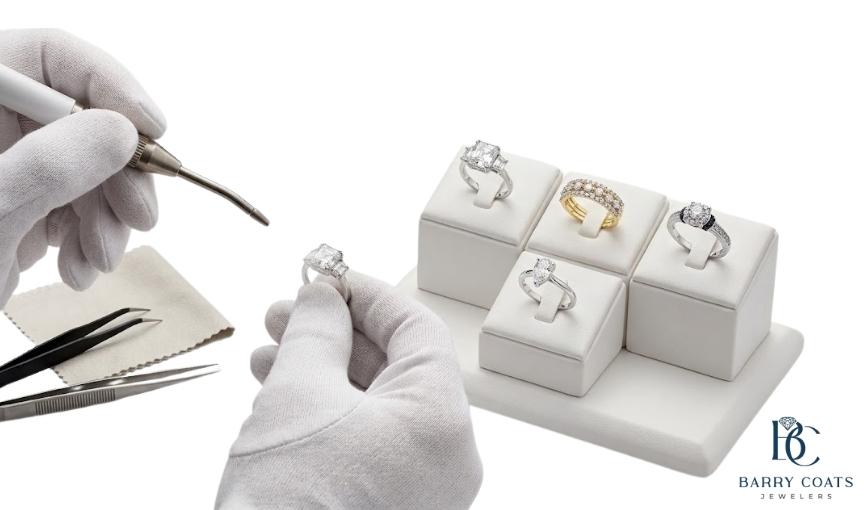
Safe Diamond Ring Cleaning Routine Tips
Your engagement ring or diamond band carries significant personal value. Over time, daily activities cause soaps, hand lotion, and natural body oils to build up behind the center stone. This thin layer blocks light from passing through the gem, making it look dull or cloudy. Following a safe diamond ring cleaning routine keeps your piece bright without risking damage to the delicate metal or setting.
At Barry Coats Jewelers, we want your fine jewelry to stay in great condition for many years. Whether your band is made of yellow gold, white gold, rose gold, or platinum, simple care habits make a big difference. Here is what you need to know to safely wash your jewelry at home while avoiding common hazards.
Key Takeaways
- Regular maintenance removes daily body oils, hair products, and hand lotions from your jewelry.
- Soak your piece in warm tap water mixed with mild dish soap for twenty minutes to loosen build-up.
- Avoid harsh chemicals like bleach, chlorine, ammonia, and abrasive toothpastes that damage metal settings.
- Use a soft-bristled toothbrush to clean hidden areas underneath the main gem.
- Schedule regular checkups with Barry Coats Jewelers to verify your settings and prongs remain secure.
Safe Cleaning Solutions for Daily Maintenance
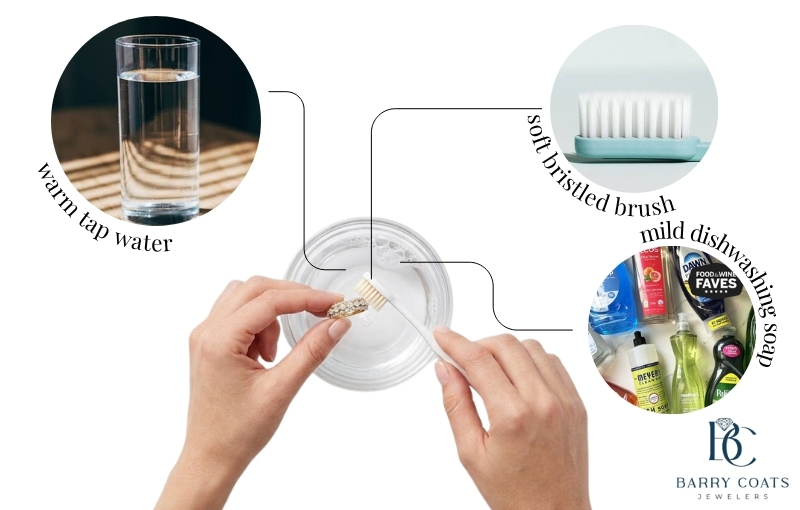
Using the right soap protects both natural and lab-grown diamonds. Heavy household chemicals can strip away metal finishes, weaken solder joints, or cause discoloration over time. Stick to gentle, simple ingredients that you already have in your home.
Here is a list of items that are safe to use for your routine wash:
- Warm tap water
- Mild dish soap (preferably free of strong dyes and harsh fragrances)
- A soft-bristled baby toothbrush
- A clean, lint-free microfiber cloth
Pro Tip: Never wash your ring directly over an open sink drain. Always place a solid rubber stopper over the drain or wash the piece inside a small, shallow bowl to prevent accidental drops down the pipe.
Cleaning Chemical Safety Guide
| Cleaning Solution | Safe for Rings? | Risk to Metal or Gem |
|---|---|---|
| Mild Dish Soap & Warm Water | Safe | None for secure, undamaged settings |
| Household Bleach or Chlorine | Dangerous | Weakens gold alloys and causes pitting |
| Toothpaste or Baking Soda | Dangerous | Scratches soft metals like gold and platinum |
| Acetone or Paint Thinner | Dangerous | Strips protective coatings and gem treatments |
| Commercial Jewelry Cleaners | Check Label | Safe for hard stones, but can damage delicate gems |
Oil Removal Methods for Daily Build-Up
Everyday skin oils and hand creams form a sticky film on the underside of your mounting. This film traps dirt, which hides the natural fire of your diamond. Applying gentle oil removal methods once a week helps keep the gem clear and reflective.
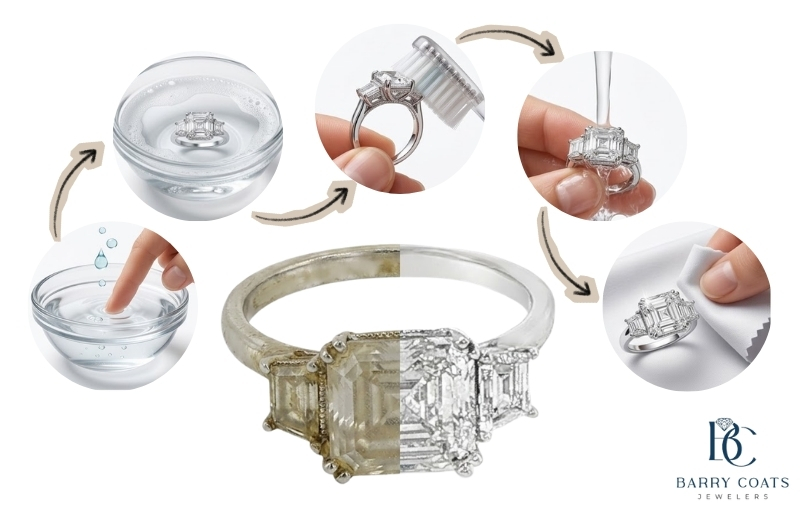
Follow these simple steps for safe home care:
- Prepare the Warm Soap Bath: Fill a small bowl with warm water and add three to four drops of mild dish soap. Stir the liquid gently with your finger until it foams slightly.
- Soak the Piece: Place your ring into the bowl. Let it sit undisturbed for twenty to thirty minutes. This allows the soapy water to loosen trapped grease and dried lotion.
- Brush the Underside Gently: Pick up the ring by its band. Take a soft-bristled toothbrush and clean the small spaces behind the stone. Focus on the openings underneath the main basket where dirt accumulates.
- Rinse with Warm Water: Hold your piece firmly and rinse it under clean running water in a plugged sink or a separate bowl of fresh warm water.
- Dry and Polish: Pat the metal dry using a lint-free cloth. Allow the piece to air dry completely on a towel before sliding it back onto your finger.
Sparkle Restoration Tips for Gold and Platinum
Different metal bands require different levels of care. White gold often features a thin rhodium finish that needs gentle handling, while yellow gold and platinum can pick up fine surface scratches from rough fabrics.
Consider these practical tips to maintain brightness across your entire setting:
- Clean the Back Facets: Light enters a diamond from the top and reflects off the back facets. Removing buildup behind the stone restores the bright flash of light.
- Inspect Prongs While Washing: Avoid pulling or rubbing roughly around thin metal prongs. Fine cloth fibers can catch on loose prongs and pull them open further.
- Store Pieces Separately: Store your ring in a soft fabric pouch or a lined compartment within your jewelry box. Diamonds are hard enough to scratch other metals and stones if left loose together.
- Remove Rings During Heavy Tasks: Take off your ring while gardening, working out, washing dishes, or swimming in chlorinated pools. Chlorine reacts with gold alloys and can weaken the structural integrity of your setting.
Safe Home Methods vs. Professional Services
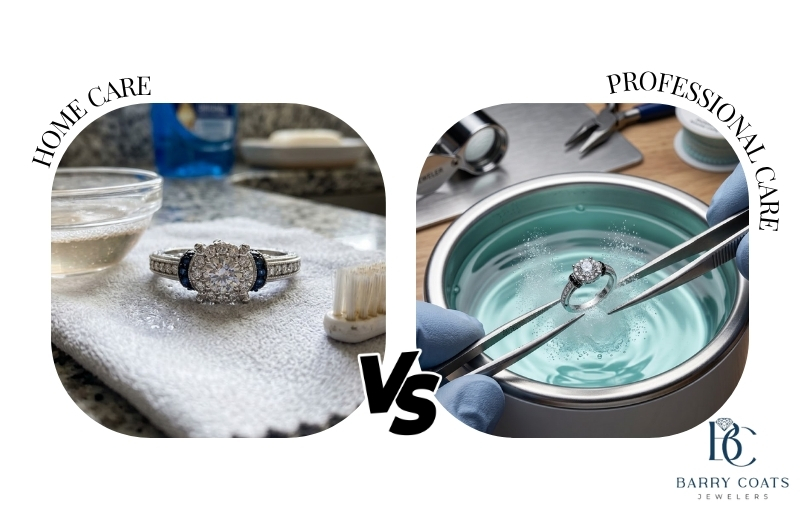
While home washing removes light surface oils, professional maintenance addresses hidden wear and tear that you cannot fix at home.
JEWELRY CARE MODES | |
| HOME CARE | PROFESSIONAL CARE |
|
|
When to Visit Barry Coats Jewelers for Inspection
Home care keeps daily grime away, but it cannot replace professional maintenance. Over time, metal prongs can shift, catch on clothing, or wear down thin from friction.
You should bring your ring into Barry Coats Jewelers if you notice any of these signs:
- The center stone or smaller accent gems make a slight clicking sound when touched.
- Metal prongs look uneven, feel sharp, or pull threads from your clothing.
- Deep scratches or dents appear on your gold, platinum, or custom band.
- The metal on your white gold ring begins to show a slight yellow tone near the base.
Our experienced team offers walk-in inspections, repair services, prong tightening, and deep cleaning to make sure your ring stays safe on your hand.
Frequently Asked Questions
How often should you scrub your diamond ring?
Soaking your piece in warm soapy water once a week is safe for regular wear. A light brushing behind the stone removes weekly build-up without causing stress to the metal setting.
Is alcohol-based hand sanitizer safe for engagement rings?
Occasional contact with liquid hand sanitizer will not harm diamonds, yellow gold, or platinum. However, frequent use can leave a thin film over the gem or cause white gold coatings to dull faster over time.
Can baking soda or toothpaste hurt metal settings?
Yes. Both baking soda and toothpaste contain tiny abrasive particles. While these substances scrub teeth, they can leave fine permanent scratches on soft metals like yellow gold, white gold, and rose gold.
Can you clean diamond rings using steam at home?
High-pressure home steam devices can dislodge stones if your prongs are already loose or damaged. It is best to let a professional jeweler inspect your ring before applying steam or high heat.
What should you do if a stone feels loose?
If a diamond moves or shifts in its setting, stop wearing the ring right away. Store it safely inside a small pouch and bring it to Barry Coats Jewelers for a professional repair.
Protecting Your Fine Jewelry Investment
Maintaining a gentle routine keeps your ring glowing without causing unnecessary wear on metal settings or delicate prongs. By using warm tap water, mild dish soap, and soft brushes, you keep daily buildup from clouding your stones. Pair your safe home care habits with regular visits to local experts to protect your favorite pieces for years to come.
Visit Barry Coats Jewelers in Livingston, Texas for professional jewelry care, stone inspections, repairs, and custom designs. Our experienced team is ready to help keep your fine jewelry in excellent condition.